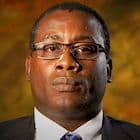
Interviews with Jorge Luis Garcia Perez Antúnez
Cuba
Torture
Recalling incidents of torture.
Transcript
There were so many [incidents of torture]! In 1995, after eight days on a hunger strike, and for only trying to greet a political prisoner as I was being taken to the infirmary, I was brutally beaten by high-ranking officials in the Kilo 8 Prison in Camaguey.
Right now I suffer from a tear or a lesion in my right knee for which I will soon get an operation, God willing.
On October 10, 1994, the year I turned 30, high-ranking Political Police officials at Santa Clara Del Presidio Prison beat me with machetes. I can show you the scars. They struck me with the back of a machete, the dull side of the blade, but “accidentally,” the machete shifted and they cut me.
And I tell you, there are so many examples that it is difficult… In the Guantanamo Prison, in Cuba, they put me in the “tolas” cells, hermetically enclosed cells with steel plated doors. I almost suffocated to death. I spent 45 days and nights next to Nestor Rodriguez Lobaina, the former prisoner of conscience.
There are so many examples of the torture that, had I come prepared, I would have shared a host of tortures because… I am a specialist in the tortures I endured.
[Nestor Rodriguez Lobaina (1965 – ) is a Cuban freedom activist and former prisoner of conscience.]
About Jorge Luis Garcia Perez Antúnez
Jorge Luis García Pérez (better known as “Antúnez”) was born in Placetas, Cuba in 1964. He is the leader of the Orlando Zapata Tamayo National Resistance Front. The Front is a Cuban civil society organization named for a political prisoner who died while on a hunger strike in 2010.
As an Afro-Cuban, Antúnez experienced the regime’s discrimination against minorities in restricting both educational and career opportunities. Such treatment, along with severe political repression, contributed to his disenchantment with the regime.
Antúnez, inspired by freedom movements in Eastern Europe, became active in the Cuban opposition. In March 1990, he was arrested for publically denouncing the Castro regime and sentenced to five years in prison. Despite his incarceration, Antúnez remained defiant by refusing to wear a prisoner’s uniform and rejecting the government’s re-education programs.
Antúnez also created the Pedro Luis Boitel political prisoners group in honor of the famous prisoner of conscience who died during a hunger strike in 1972. Through this organization, the prisoners drew inspiration and encouragement to continue their struggle. As a result, Antúnez was subject to solitary confinement, torture, and an extension of his five year sentence. He endured 17 years of prison before being released in 2007.
Antúnez continues advocating for freedom and democracy in Cuba with his wife, Yris Tamara Pérez Aguilera, leader of the Rosa Parks Feminist Movement for Civil Rights. His work involves supporting Cuban political prisoners, and expanding political freedoms and civil liberties.
Twitter: @antunezcuba