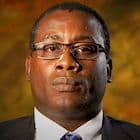
Interviews with Jorge Luis Garcia Perez Antúnez
Cuba
Catholic Church In Cuba
Antunez discusses the Church in Cuba.
Transcript
The [Roman Catholic] Church in Cuba… We think of the Church like everyone else. It has been assaulted. It has been demonized. It has suffered much repression. That is if we view the Church as a community. I am Catholic. Now, if we view the Church as the ecclesiastic hierarchy, as the control and the monopoly of a group of persons led by [Cardinal] Jaime Ortega Alamino and under the influence of certain Vatican officials, we consider that the Church has displayed an ambiguous stance, insensitive and even complicit with the dictatorship.
[Jaime Lucas Ortega y Alamino (1936 – ) is the Archbishop of Havana and a Cardinal of the Roman Catholic Church.]
The Church, the Cuban ecclesiastical hierarchy, has not known how to behave consistently, with firmness, or with a Cuban nature. We are not asking [Cardinal] Jaime Ortega to join our protests or marches, nor are we asking him to visit the prisons. We are asking him to be consistent with the Church’s own Christian commitment.
[During Pope] Benedict XVI’s last visit, of which our country has a very bad memory, the Cuban ecclesiastical hierarchy [seemingly] conspired against the opposition and the people. For example, when those that organized Benedict XVI’s schedule allowed a meeting with Fidel Castro, who was no longer Head of State, but prohibited meetings with the Ladies in White, Oswaldo Paya Sardinas, Dagoberto Valdes, and important opposition leaders, they were causing us harm.
[Pope Benedict XVI (1927 – ), born Joseph Ratzinger, led the Roman Catholic Church from 2005 until his resignation in 2013. He visited Cuba in March 2012. Fidel Castro (1926 – ) led the Cuban Revolution and seized power in 1959. He established a communist dictatorship in Cuba and led the country until 2008. The Ladies in White (Damas de Blanco) is a civil society organization founded by the mothers, spouses and daughters of dissidents who were imprisoned by Cuban authorities during the “Black Spring” crackdown in March 2003. They practice nonviolent resistance against the repression of civil liberties on the island of Cuba and support political prisoners. Oswaldo Paya Sardinas (1952 – 2012) was a Cuban dissident who founded the Christian Liberation Movement. He was awarded the Andrej Sakharov Prize by the European Parliament for his opposition activity. He died in a mysterious automobile accident, which many have alleged was orchestrated by the Cuban government. Dagoberto Valdes Hernandez (1955 – ) is a Cuban freedom activist and Catholic scholar.]
It is inconceivable that none of the Cuban Catholic bishops had the courage, commitment, consistency, and sense of justice to mention the surge of arrests and repression against the Cuban opposition movement during that time. They interrupted telephone communications of all the active opposition. Our homes were under siege for days. However, the bishops did not mention it, nor perhaps did they communicate this information to the Pope.
About Jorge Luis Garcia Perez Antúnez
Jorge Luis García Pérez (better known as “Antúnez”) was born in Placetas, Cuba in 1964. He is the leader of the Orlando Zapata Tamayo National Resistance Front. The Front is a Cuban civil society organization named for a political prisoner who died while on a hunger strike in 2010.
As an Afro-Cuban, Antúnez experienced the regime’s discrimination against minorities in restricting both educational and career opportunities. Such treatment, along with severe political repression, contributed to his disenchantment with the regime.
Antúnez, inspired by freedom movements in Eastern Europe, became active in the Cuban opposition. In March 1990, he was arrested for publically denouncing the Castro regime and sentenced to five years in prison. Despite his incarceration, Antúnez remained defiant by refusing to wear a prisoner’s uniform and rejecting the government’s re-education programs.
Antúnez also created the Pedro Luis Boitel political prisoners group in honor of the famous prisoner of conscience who died during a hunger strike in 1972. Through this organization, the prisoners drew inspiration and encouragement to continue their struggle. As a result, Antúnez was subject to solitary confinement, torture, and an extension of his five year sentence. He endured 17 years of prison before being released in 2007.
Antúnez continues advocating for freedom and democracy in Cuba with his wife, Yris Tamara Pérez Aguilera, leader of the Rosa Parks Feminist Movement for Civil Rights. His work involves supporting Cuban political prisoners, and expanding political freedoms and civil liberties.
Twitter: @antunezcuba