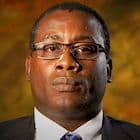
Interviews with Jorge Luis Garcia Perez Antúnez
Cuba
Source of Human Freedom
“I can’t recall a tribe, a generation, or a country that has not fought for freedom.”
Transcript
Human freedom comes from God. Human freedom comes from the heart and the mind. It is not a gift from any regime. No regime has to tell me, “We will allow you now… You may go… You may not go… We will sentence you to… You will go to an event and say this or that.” Freedom comes from the heart and above all, God. It comes from our own conscience. It may possibly be something that is there before we exist, and it is very important.
Freedom comes from God’s nature and from our own creation. Freedom was either born before we were born or with us. I can’t recall a tribe, a generation, or a country that has not fought for freedom. It’s a pity that opportunistic demagogues, pseudo-revolutionaries, and political dabblers have abused freedom so much.
There are people willing to sacrifice everything for freedom because it is basic and fundamental. There are those of us who would rather die than live as slaves. We are willing to sacrifice everything because we do not feel like men, like Cubans, like human beings, like Christians and like children of God if we accept life under oppression. We are ourselves obeying a system that goes against freedom.
It is not sincere. It is improper, and even unnatural, to comprehend someone who is not free and doesn’t fight for it.
About Jorge Luis Garcia Perez Antúnez
Jorge Luis García Pérez (better known as “Antúnez”) was born in Placetas, Cuba in 1964. He is the leader of the Orlando Zapata Tamayo National Resistance Front. The Front is a Cuban civil society organization named for a political prisoner who died while on a hunger strike in 2010.
As an Afro-Cuban, Antúnez experienced the regime’s discrimination against minorities in restricting both educational and career opportunities. Such treatment, along with severe political repression, contributed to his disenchantment with the regime.
Antúnez, inspired by freedom movements in Eastern Europe, became active in the Cuban opposition. In March 1990, he was arrested for publically denouncing the Castro regime and sentenced to five years in prison. Despite his incarceration, Antúnez remained defiant by refusing to wear a prisoner’s uniform and rejecting the government’s re-education programs.
Antúnez also created the Pedro Luis Boitel political prisoners group in honor of the famous prisoner of conscience who died during a hunger strike in 1972. Through this organization, the prisoners drew inspiration and encouragement to continue their struggle. As a result, Antúnez was subject to solitary confinement, torture, and an extension of his five year sentence. He endured 17 years of prison before being released in 2007.
Antúnez continues advocating for freedom and democracy in Cuba with his wife, Yris Tamara Pérez Aguilera, leader of the Rosa Parks Feminist Movement for Civil Rights. His work involves supporting Cuban political prisoners, and expanding political freedoms and civil liberties.
Twitter: @antunezcuba