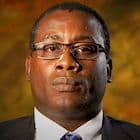
Interviews with Jorge Luis Garcia Perez Antúnez
Cuba
Changes In Cuba?
“A country needs much more. It needs liberty and democracy.”
Transcript
Evidently the [Raul] Castro regime is promoting this false image to the world about changes and reforms [supposedly] being made. For example, the travel of some opposition members that have been allowed to exit Cuba serves an objective. What is the objective? First that we become, perhaps unconsciously, their mouthpiece and that we deny what is occurring in Cuba. How do we reconcile the fact that Antúnez, Iris [Tamara Perez Aguilera] and other dissidents are allowed to travel outside of Cuba and criticize [the regime], talking about how there is still repression in Cuba?
[Raul Castro (1931 – ) is the younger brother of Fidel Castro who established Cuba’s communist dictatorship. Raul assumed leadership of the Communist Party and the country in 2008. Iris Tamara Perez is Jorge Luis Perez Antunez’s wife and a fellow freedom activist.]
What the regime seeks with our travels is to polish its image abroad, confuse public opinion, and promote a message that there are reforms. There is no reform on behalf of the regime in Cuba. First, the regime can’t be reformed. The Castro regime would not do anything to risk what it wants most: power.
We don’t think that a country becomes free by allowing 4, 5, or 10 opposition members to travel. A country cannot liberate itself permitting people to make money by refilling cigarette lighters or having a tiny private restaurant around the corner. A country needs much more. It needs freedom and democracy. Reforms must have a foundation. Cuba has never been closer to freedom than today, but neither has it ever been so at risk of being cut off and turned into a media circus.
The regime could at this moment be fabricating a fake dissident group with which to negotiate a future for Cuba. That is why we say and do not fear to say anywhere we go, that we prefer 50 more years of struggle, of resistance, and even of imprisonment and death than coming to an agreement with a dictatorship that preserves the status quo. We do not call for vengeance, confrontation, or hate. We oppose reconciliation without justice first.
The regime spends millions of dollars falsifying its image. It can’t be reformed. There is change, but it is happening within each Cuban who thinks democratically.
If I were asked for an example of how the Cuban opposition is growing and that the people are growing less fearful, I would point to the youth. I was among the youth in the [1970s] that were indoctrinated and formed by that repressive apparatus. Fortunately, we were able to remove that blindfold. When we see today’s youth, joining the opposition’s ranks, shouting for change in the streets, proclaiming a desire for true freedom, it is encouraging and demonstrates how far we’ve come.
About Jorge Luis Garcia Perez Antúnez
Jorge Luis García Pérez (better known as “Antúnez”) was born in Placetas, Cuba in 1964. He is the leader of the Orlando Zapata Tamayo National Resistance Front. The Front is a Cuban civil society organization named for a political prisoner who died while on a hunger strike in 2010.
As an Afro-Cuban, Antúnez experienced the regime’s discrimination against minorities in restricting both educational and career opportunities. Such treatment, along with severe political repression, contributed to his disenchantment with the regime.
Antúnez, inspired by freedom movements in Eastern Europe, became active in the Cuban opposition. In March 1990, he was arrested for publically denouncing the Castro regime and sentenced to five years in prison. Despite his incarceration, Antúnez remained defiant by refusing to wear a prisoner’s uniform and rejecting the government’s re-education programs.
Antúnez also created the Pedro Luis Boitel political prisoners group in honor of the famous prisoner of conscience who died during a hunger strike in 1972. Through this organization, the prisoners drew inspiration and encouragement to continue their struggle. As a result, Antúnez was subject to solitary confinement, torture, and an extension of his five year sentence. He endured 17 years of prison before being released in 2007.
Antúnez continues advocating for freedom and democracy in Cuba with his wife, Yris Tamara Pérez Aguilera, leader of the Rosa Parks Feminist Movement for Civil Rights. His work involves supporting Cuban political prisoners, and expanding political freedoms and civil liberties.
Twitter: @antunezcuba