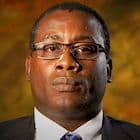
Interviews with Jorge Luis Garcia Perez Antúnez
Cuba
Access to Technology in Cuba
“I never imagined that a person sitting in front of a computer could have so much information.”
Transcript
In Tunisia, in Egypt, in all of the [Arab Spring] countries, they had access to the Internet and Facebook. I will tell you something that perhaps many do not know: In Cuba, that tiny Caribbean island that so often proclaims social justice and speaks of equality, access to the Internet is a chimera and is random. [Ordinary] Cubans do not have access to these so-called “spots” [Internet cafes] that have been located in municipalities. The cost is well above what citizens can afford.
[The Arab Spring refers to a series of uprisings across the Middle East that began in 2010 starting with Tunisia and spreading to countries such as Egypt, Libya, Syria, Yemen and others.]
The regime knows the importance of information. For that reason it manipulates and distorts it. For example, I learned of Facebook here [in the United States], I have been here two months and I am 49 years old.
I was never able to open my Twitter account to check it. I simply would send tweets from my phone. By the way, it costs me a dollar, which is 25 Cuban pesos, the same as a child’s breakfast.
I accessed my Twitter account here in the United States a few days ago. I am getting to know Facebook. I never imagined that a person sitting in front of a computer could have so much information.
When I arrived in the United States on August 4, 2013, I remember that I arrived around 11 pm or 12 midnight. It surprised me that I was still sitting in front of the computer in the morning. I could not conceive that a person could have access to all this information and to communication. The regime knows it. That is why it manipulates, distorts, and spends millions to interfere with radio stations. That is why it will prevent access to the web by any means.
But even so, we Cubans, with our enterprising spirit, have managed to break much of the censorship. Many of us have Twitter, some have Facebook, but very few can open it, except those living in the capital. We have managed to break it. We send messages, which is very expensive at $2.35. We are talking about almost 40 pesos to send a photo by mobile phone in Cuba.
Despite facing inflated prices, Cubans continue fighting. We continue to do our part because we believe that what we are doing is right. But it is important to devise strategies, initiatives, and greater support for us to access the web.
It would be beneficial for us to receive, those of us who can access the web through embassies or other means, courses on how to navigate the web, how to send communications, and the rest. It would be extremely important. That should be part of the assistance offered to the Cuban resistance.
Look at all that we have done without knowledge of the web… Imagine how it could have played out if we had more skills. I think that the cases of Tunisia and Egypt are different from Cuba, but there is something similar. The same longing for freedom and justice that moves the Tunisians and the Egyptians, moves us too.
About Jorge Luis Garcia Perez Antúnez
Jorge Luis García Pérez (better known as “Antúnez”) was born in Placetas, Cuba in 1964. He is the leader of the Orlando Zapata Tamayo National Resistance Front. The Front is a Cuban civil society organization named for a political prisoner who died while on a hunger strike in 2010.
As an Afro-Cuban, Antúnez experienced the regime’s discrimination against minorities in restricting both educational and career opportunities. Such treatment, along with severe political repression, contributed to his disenchantment with the regime.
Antúnez, inspired by freedom movements in Eastern Europe, became active in the Cuban opposition. In March 1990, he was arrested for publically denouncing the Castro regime and sentenced to five years in prison. Despite his incarceration, Antúnez remained defiant by refusing to wear a prisoner’s uniform and rejecting the government’s re-education programs.
Antúnez also created the Pedro Luis Boitel political prisoners group in honor of the famous prisoner of conscience who died during a hunger strike in 1972. Through this organization, the prisoners drew inspiration and encouragement to continue their struggle. As a result, Antúnez was subject to solitary confinement, torture, and an extension of his five year sentence. He endured 17 years of prison before being released in 2007.
Antúnez continues advocating for freedom and democracy in Cuba with his wife, Yris Tamara Pérez Aguilera, leader of the Rosa Parks Feminist Movement for Civil Rights. His work involves supporting Cuban political prisoners, and expanding political freedoms and civil liberties.
Twitter: @antunezcuba