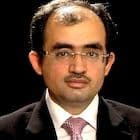
Interviews with Radwan Ziadeh
Syria
The Regime Targets Dissidents' Families
“If you get involved, you have to pay the price; not by yourself, but the whole family.”
Transcript
In each family, they have a dissident or opposition figure or a human rights activist, his or her family pay the price of such involvement. It’s like my family, they did. The way that the [Syrian President Bashar] Assad regime trying to send a message to the whole Syrian, or other Syrians: If you get involved, you have to pay the price; not by yourself, but the whole family. Then, the whole family members, they pressure you to stop your activities because they are paying the price. And that’s what happened for my family and that’s what happened in other family members.
I’m glad that my family, they are supportive of what I’m doing. That’s allowed me to continue in my work – especially my father, who died in 2008, but before, he was very active in supporting me by all the necessary means; financially, politically, and gave me the oral support I need within the family. And now, of course, my wife is doing the same. I think that without the support of your family members, it’s quite difficult to survive because you have pressure from the state and pressure from your family members, from your friends, from all authoritarian regime trying to break down all the networks, the social networks, because if you have solidarity among different groups then you will be able to stand, and face challenging the authoritarian rule.
But when they break down all the social networks, you are single, you are alone and you won’t be able to stand up against all of this type of pressure. When the Syrian revolution started, I was very active in human rights and trying to unite the opposition, play a role in the opposition. I tried to do as much as I could to make the revolution succeed, but at the same time putting in my mind my family members, what they can – what the Assad regime, they can do for them. They arrested my brother Yassin who is a businessman, has nothing to do with the politics and they kept him for three months and half at the air force security.
They tortured him; interrogated him day by day, getting from him information. But because the media attention and the international pressure about his case, the Syrian security forces decided finally to release him. But my family, my mother, my sisters, they are very afraid about what’s happened to my brother. This is why they left and hide, moving from house to house, day by day, because they cannot sleep in one day and two days in the same house because the risk of the security forces, they can arrest them at any time. With the same time, all my family members, they have travel banned; they cannot leave the country as I said before, on the story of my sister, her children and all of that.
All of that, they put such personal pressure on you. But despite of all what’s happened to my family members, after when they see what’s happening in Dana, in Homs and other Syria, they became very supportive of what I’m doing – very supportive; they believe that this is the right thing you should do to help your country and your people.
About Radwan Ziadeh
Radwan Ziadeh is a Syrian dissident and democracy activist. He grew up in a middle class family in Damascus and became politically active after the death of President Hafez Assad in 2000. Remembering the struggles of his own family growing up, Ziadeh wanted to live in a free country and helped establish the Syrian Human Rights Association, a group dedicated to promoting human rights, in 2001.
Four years later, Ziadeh founded his own organization called the Damascus Center for Human Rights Studies. Through his center, Ziadeh acted as an international lobbyist for the cause of Syrian freedom. Speaking at venues like the United Nations Human Rights Council, Ziadeh raised awareness about the human rights abuses being committed by the Assad regime in Damascus. As Ziadeh intensified the spotlight on Syria, the government retaliated by placing a travel ban on his family, effectively imprisoning them in Syria, or stranding those traveling abroad in third countries. In 2007, Ziadeh fled Syria for the United States as the Assad government issued a warrant for his arrest.
Beginning in March 2011, the Syrian people revolted against President Bashar Assad, who had succeeded his father, challenging the government’s control over the country and resulting in a tense standoff between the remnants of the regime and diverse opposition forces. In 2012, Ziadeh seized the opportunity afforded him by the revolution and visited his homeland for the first time in five years. He continues to reside in the United States where he works through organizations like the Damascus Center for Human Rights Studies and the Syrian Center for Political and Strategic Studies to rebuild Syria into a free and democratic society.
Twitter: @radwanziadeh