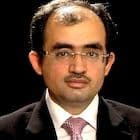
Interviews with Radwan Ziadeh
Syria
The Power of Social Media
Radwan Ziadeh discusses the use of social media in organizing opposition movements.
Transcript
The social media played an important role in the whole Arab revolt, especially the Facebook. Twenty percent of Tunisians, they have their own Facebook account. Then you have one-fifth of the population they have their own Facebook account. This is why, when they set up a time for demonstration, 70,000 or 80,000, they show up. That’s reflected what’s happening in the virtual world, in the social media, reflected on the actual world. And this is the challenge because sometimes you see a lot of Facebook pages as fake Facebook pages or as fake Facebook groups, but how you put a link being actual world and being the technology.
The Facebook played a very important role in Tunisia and in Egypt as a main source to set the information to demonstrate against the [former Tunisian President Zine El Abidine] Ben Ali regime and the [Former Egyptian President Hosni] Mubarak regime. In Syria it was the main source of information of what’s going on in the country, because there is no other source of information. You cannot believe or rely on the state media, and you have very limited time in the Arab broadcasting. This is you have flow of information on the Facebook and in Twitter. And as I said before, it’s young societies. They are actually excellent in using this social media.
Every day, they learn something new. Every day, they use this social media with a professional way and prove that they will be able to capture, despite of all of these technologies which did not exist before in Syria or in Egypt, and very high expensive. But all of that, they are easy to learn things and use it just few minutes after they’re getting all of this instructions and instruments. The Facebook became a tool, of course, to organize protest in Egypt and in Tunisia. In Syria it became a tool of information, providing, disseminating information about what’s happened in different cities. And now all of this in Syria, in each city it has called something groups or tensipiyat [an Arabic word roughly meaning “people coming together with shared interests”], where the activists, they have a network, and they have a group on the Facebook.
In each city, each village, they have a group in the Facebook. And if you need to know the people being killed in this city or in this town, the much easier way, to go to their Facebook group. And I think that the Syrians became very active in this way as the Facebook became the main source of information. Ninety-five percent of the population doesn’t have access to the Internet. The number of the people that does have access to the Internet was increasing, and in the last event was increasing dramatically because the people, they want to know what’s going on in the country.
They cannot rely on the state media. And the only way, it’s the Facebook. And then you have to have Internet. And because the Internet is under the censorship of the Assad security forces, they relied more and more on the devices we sent to – it’s about Internet devices, where they have connected to the Internet through the satellite, not through the state servers.
About Radwan Ziadeh
Radwan Ziadeh is a Syrian dissident and democracy activist. He grew up in a middle class family in Damascus and became politically active after the death of President Hafez Assad in 2000. Remembering the struggles of his own family growing up, Ziadeh wanted to live in a free country and helped establish the Syrian Human Rights Association, a group dedicated to promoting human rights, in 2001.
Four years later, Ziadeh founded his own organization called the Damascus Center for Human Rights Studies. Through his center, Ziadeh acted as an international lobbyist for the cause of Syrian freedom. Speaking at venues like the United Nations Human Rights Council, Ziadeh raised awareness about the human rights abuses being committed by the Assad regime in Damascus. As Ziadeh intensified the spotlight on Syria, the government retaliated by placing a travel ban on his family, effectively imprisoning them in Syria, or stranding those traveling abroad in third countries. In 2007, Ziadeh fled Syria for the United States as the Assad government issued a warrant for his arrest.
Beginning in March 2011, the Syrian people revolted against President Bashar Assad, who had succeeded his father, challenging the government’s control over the country and resulting in a tense standoff between the remnants of the regime and diverse opposition forces. In 2012, Ziadeh seized the opportunity afforded him by the revolution and visited his homeland for the first time in five years. He continues to reside in the United States where he works through organizations like the Damascus Center for Human Rights Studies and the Syrian Center for Political and Strategic Studies to rebuild Syria into a free and democratic society.
Twitter: @radwanziadeh