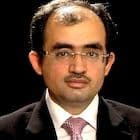
Interviews with Radwan Ziadeh
Syria
Impact of External Actors on the Revolution
“Without the support of the Syrian diaspora, I don’t think that the Syrian revolution would have continued.”
Transcript
The foreign support in Syria is very limited. The Syrians, they rely first on themselves and then on the Syrian diaspora. The Syrian diaspora was very supportive, and they are very flexible in sending the money, in sending the devices and all the equipment that people inside Syria they’re looking, because the outside, it has such rules, it have to have – apply for a grant and you have to get information and approval and all of that.
No, the diaspora, they have more flexibility, especially the diaspora in Europe, in United States and in the Gulf countries. Just they collect the money and they send it to Syria or they provide the devices, the satellite, the Inmarsat phone and all the equipment and just send it. Without the support and the help of the Syrian diaspora, I don’t think that the Syrian revolution was able to continue. According to the statistics, we have more than 5 million Syrians. And you have a very well educated and rich community in the United States and in the Gulf countries because the Syrians they are highly professional. And in the United States you have more than 7,000 physicians – doctors, the same in Europe.
In Gulf countries, you have very strong business community. And all of these communities, they help the Syrian people inside Syria in sending equipment to continue the revolution, and sending the money. And after that, because the growing of the humanitarian crisis in Syria, they played an important role. When the original Arabic broadcaster, Al-Jazeera, started in 1996, which opened a little bit the space for the criticism against the leaders, where this is something unacceptable or no tolerance in all the national medias to criticize your leaders or your president or the institutions of the security forces – Mukhabarat [Syrian intelligence agency], the army and all of that – it was a very interesting, let’s say, adventure when Al-Jazeera tried that.
Year by year, with a lot of events taking place in the Middle East, Al-Jazeera and other – Al Arabiya [a pan-Arab news network], the BBC [British Broadcasting Channel] later on, appeared that’s the only space for the people who can trust and believe, who can take news from them. When the Arab revolt started, Al-Jazeera was among the first who opened the space 24 hours for the people, for the revolutionaries to speak out, especially in Tunisia, where other Arabic broadcasts did not do that. Then the Tunisian people, they were watching Al-Jazeera 24 hours to know what’s going on in their home country. And that’s happened for others – in Egypt, later on in Libya, and in Syria.
The Arab broadcasting, the original Arab broadcasting, played an important role for the people to get the information and to get inspired about what’s happening in other countries, inspired to repeat again in their home countries. And it became also the main source of the information of all the Syrians or all the Arabs because they trust this broadcast. A lot of question and criticism, of course, for any media, for any outlet in the way of doing that, but still, it’s far away have credibility than the state media, where the state media is just propaganda, just repeating the lies day by day, and no one believing it. This is why Al-Jazeera became the main source of information.
About Radwan Ziadeh
Radwan Ziadeh is a Syrian dissident and democracy activist. He grew up in a middle class family in Damascus and became politically active after the death of President Hafez Assad in 2000. Remembering the struggles of his own family growing up, Ziadeh wanted to live in a free country and helped establish the Syrian Human Rights Association, a group dedicated to promoting human rights, in 2001.
Four years later, Ziadeh founded his own organization called the Damascus Center for Human Rights Studies. Through his center, Ziadeh acted as an international lobbyist for the cause of Syrian freedom. Speaking at venues like the United Nations Human Rights Council, Ziadeh raised awareness about the human rights abuses being committed by the Assad regime in Damascus. As Ziadeh intensified the spotlight on Syria, the government retaliated by placing a travel ban on his family, effectively imprisoning them in Syria, or stranding those traveling abroad in third countries. In 2007, Ziadeh fled Syria for the United States as the Assad government issued a warrant for his arrest.
Beginning in March 2011, the Syrian people revolted against President Bashar Assad, who had succeeded his father, challenging the government’s control over the country and resulting in a tense standoff between the remnants of the regime and diverse opposition forces. In 2012, Ziadeh seized the opportunity afforded him by the revolution and visited his homeland for the first time in five years. He continues to reside in the United States where he works through organizations like the Damascus Center for Human Rights Studies and the Syrian Center for Political and Strategic Studies to rebuild Syria into a free and democratic society.
Twitter: @radwanziadeh