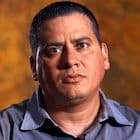
Interviews with Pablo Pacheco Ávila
Cuba
Why I Became a Dissident
“Some people are born rebellious by nature.”
Transcript
I was born in Puerto Padre de las Tunas, a municipality in the eastern provinces. When I was very young my parents moved to Ceballos, a small town in the province of Ciego De Avila, where I spent my childhood.
[I had] the usual education of a child raised in the communist system — first elementary school, then secondary, then pre-university [high school], and then college.
Some people are born rebellious by nature and I was one of them. In ´88, when Fidel Castro did not allow athletes to go to the Olympic Games in Seoul, it marked me. [In solidarity with its North Korean ally, Cuba boycotted the 1988 Summer Olympic Games in Seoul, South Korea.] I started asking questions. I wondered about the revolutionary process. Why I could not do this or that? That greatly influenced me. I liked to search for information.
Then came my obligatory military conscription. That was the last straw. I started to see things differently. I was a young, rebellious man; I liked to think. I started to listen to Radio Marti and the BBC. I began to hear the true reality of Cuba, which I knew, but the official Cuban press neglected in a way beyond belief. I took baby steps and started looking.
I found the Cuban Foundation for Human Rights. [I met] Normando [Hernandez], and later Pedro Argüelles Morán, working in independent journalism in Cuba. [Normando Hernandez (1969 – ) is a Cuban independent journalist and human rights advocate.
From 2003 to 2010, he was a prisoner of conscience after his arrest in the Black Spring crackdown. He has lived in the United States since 2011. Pedro Argüelles Morán (1948 – ) is a Cuban dissident and independent journalist. He was the director of the Avila Cooperative of Independent Journalists (CAPI) and was arrested and imprisoned in the 2003 Black Spring crackdown.
He refused exile in Spain in 2010 and remained in prison until 2011. In 2013, he received asylum in the United States.] The Cuban Foundation for Human Rights is an organization that was responsible for monitoring and defending the rights of citizens throughout the island.
It was a job that I liked. I was organizing secretary of the organization. We monitored and informed the world of the human rights violations of the Cuban regime. In Cuba the regime does not allow dissident movements. All are banned. They are tolerated up to a point. When they no longer tolerate you, then you inevitably go to prison.
About Pablo Pacheco Ávila
Pablo Pacheco was born in the city of Puerto Padre in Cuba’s Las Tunas province.
He first became involved with the opposition in 1998 when he joined the Cuban Human Rights Foundation, an organization that monitors and denounces human rights violations and supports Cuban political prisoners. He became the foundation’s secretary.
In 1999, Pablo started a career as an independent journalist. He worked for several independent news agencies such as the College of Independent Journalists of Camaguey, the Avila Independent Journalists Cooperative, and the web-based Cubanet, an online compendium of independent news stories offering alternative perspectives from those of government-controlled media.
On March 19, 2003, Pablo was arrested during a massive government crackdown on activists known as the Black Spring. He was one of 75 nonviolent dissidents, human rights activists, and independent librarians arrested by security forces. In a summary judicial proceeding, he was sentenced to twenty years in prison.
During his incarceration, Pablo helped to establish a blog called “Voices Behind Bars” with dissident bloggers Iván García, Yoani Sánchez and Claudia Cadelo. The platform featured testimonials from political prisoners describing conditions and abuse inside Cuban jails. Their stories were recorded over the phone during the prisoners’ limited telephone privileges. In the event that guards cut off the phone lines, relatives would smuggle written testimonials out of the prison for inclusion in the blog. In 2009, “Voices Behind Bars” was recognized as the best of 187 Cuban opposition blogs in the Una Isla Virtual (A Virtual Island) competition.
After 7 years, Pablo was freed when the Catholic Church and the Spanish government negotiated the release of the 75 Black Spring prisoners. Pablo went into exile and currently lives in Miami, Florida, with his wife and son. He continues to share his experiences from his time in prison and remains active in Cuba’s freedom movement.