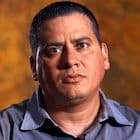
Interviews with Pablo Pacheco Ávila
Cuba
Independent Journalism in Cuba
Independent journalists take responsibility and assume the consequences.
Transcript
The independent journalist in Cuba is the one who unmasks reality, who seeks and then disseminates the information the regime hides with all its might. We are talking from inside prisons; we talk about bread going bad, about evictions. Things the official press dares not publish. Independent journalists, even with many limitations, bravely report on these things.
With the strict censorship the regime has over the population, it’s very difficult for people to know what’s happening. There are no independent newspapers, nothing. But the Cuban people listen to Radio Martí to find out what is happening. Even what’s happening three blocks from their home. Censorship is big.
I think that when a Cuban journalist writes as he is dictated to by the regime, that journalist is a prisoner. The difference with us is that we write without dictate, taking responsibility and assuming the consequences.
The blogging movement is a new tool of independent journalism. With other views, but is the same. It is writing without dictate. It is writing what the conscience dictates. It depicts a picture of what happens in Cuba. It does not necessarily have to be for [consumption] outside [Cuba]. Those outside obviously have to help them publish their notes, reports and articles, because they have no Internet access in Cuba due to the regime´s censorship.
Without those outside it is practically impossible. There are some small pamphlets that are circulated, but I do not think that in Cuba you can do much, because it is tightly controlled. But there are other ways: USBs, memory sticks, disks. They are sent from here [the United States], they arrive in Cuba. Books. In Cuba books are banned! Some books are banned.
Can you imagine not being able to read what you want to read? And you take information to the people when you take a book or a memory stick with news, with lectures from people who talk about democracy, who speak of freedom. I think that´s a way to give out information to the people that so need it.
About Pablo Pacheco Ávila
Pablo Pacheco was born in the city of Puerto Padre in Cuba’s Las Tunas province.
He first became involved with the opposition in 1998 when he joined the Cuban Human Rights Foundation, an organization that monitors and denounces human rights violations and supports Cuban political prisoners. He became the foundation’s secretary.
In 1999, Pablo started a career as an independent journalist. He worked for several independent news agencies such as the College of Independent Journalists of Camaguey, the Avila Independent Journalists Cooperative, and the web-based Cubanet, an online compendium of independent news stories offering alternative perspectives from those of government-controlled media.
On March 19, 2003, Pablo was arrested during a massive government crackdown on activists known as the Black Spring. He was one of 75 nonviolent dissidents, human rights activists, and independent librarians arrested by security forces. In a summary judicial proceeding, he was sentenced to twenty years in prison.
During his incarceration, Pablo helped to establish a blog called “Voices Behind Bars” with dissident bloggers Iván García, Yoani Sánchez and Claudia Cadelo. The platform featured testimonials from political prisoners describing conditions and abuse inside Cuban jails. Their stories were recorded over the phone during the prisoners’ limited telephone privileges. In the event that guards cut off the phone lines, relatives would smuggle written testimonials out of the prison for inclusion in the blog. In 2009, “Voices Behind Bars” was recognized as the best of 187 Cuban opposition blogs in the Una Isla Virtual (A Virtual Island) competition.
After 7 years, Pablo was freed when the Catholic Church and the Spanish government negotiated the release of the 75 Black Spring prisoners. Pablo went into exile and currently lives in Miami, Florida, with his wife and son. He continues to share his experiences from his time in prison and remains active in Cuba’s freedom movement.