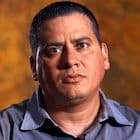
Interviews with Pablo Pacheco Ávila
Cuba
Civil Society and Cuba
“Until we unite, they will continue to crush us.”
Transcript
I would love to help rebuild the ruin that is now Cuba. My aspiration for Cuba is that it will join and insert itself in the free world, in the democratic process where the fundamental rights of the individual are respected, where nobody goes to prison for thinking differently. Where women with a gladiolus in their hands will not be punished for exercising a right. [The gladiolus is the symbol for the Damas de Blanco movement. The women carry this flower as they protest the Cuban regime.]
I want the Cuba of which [Jose] Martí dreamed, dreamed by all of us who believe in freedom and democracy.
[Jose Marti (1853 – 1895) is recognized as Cuba’s national hero. Marti was a writer and essayist who advocated for Cuban independence from Spain.]
There are many differences and I´m glad it’s like that. Everyone thinking the same way has led us to ruin. That is what Fidel Castro created since 1959.
I believe that the task is to unite. I´m not talking about uniting just because I like the word … I think we should unite because Cuba´s peaceful opposition seeks the same goal- democracy in Cuba. Until we unite against that system, against the dictatorship, placing the interests of Cuba above our own personal interests, they will continue to crush us like cockroaches as they have done so far. That is a subject for much discussion.
There is a lot of speculation that the Cuban opposition is divided. I do not think the peaceful opposition is divided. Everyone simply has his own views and that is good. That is what I want for Cuba, that everyone has his own point of view and political leaning. That I do not agree on a project with so and so does not mean that we are divided.
The Cuban regime has tried by all means to divide the Cuban people, not just the opposition. They operate on the precept of divide and conquer. That is how they have lasted fifty plus years in power. But I do not think the peaceful opposition is divided. I believe that they should create a platform so that we may unite and decide what we want — Cuba’s freedom. That Cuba becomes democratic, free, independent.
I think the peaceful opposition should be knocking on doors, convincing the average citizen that there is a different world of opportunities. The ordinary citizen is fed up with this system and we must break that barrier of fear of the opposition with the people and the people with the dictatorship. They must break the barrier of fear and the barrier of the double standard.
That´s it … knock on doors, go proselytizing with the people and show them that [human] rights exist, that a very different world exists than the one the Cuban dictatorship has painted for so many years.
About Pablo Pacheco Ávila
Pablo Pacheco was born in the city of Puerto Padre in Cuba’s Las Tunas province.
He first became involved with the opposition in 1998 when he joined the Cuban Human Rights Foundation, an organization that monitors and denounces human rights violations and supports Cuban political prisoners. He became the foundation’s secretary.
In 1999, Pablo started a career as an independent journalist. He worked for several independent news agencies such as the College of Independent Journalists of Camaguey, the Avila Independent Journalists Cooperative, and the web-based Cubanet, an online compendium of independent news stories offering alternative perspectives from those of government-controlled media.
On March 19, 2003, Pablo was arrested during a massive government crackdown on activists known as the Black Spring. He was one of 75 nonviolent dissidents, human rights activists, and independent librarians arrested by security forces. In a summary judicial proceeding, he was sentenced to twenty years in prison.
During his incarceration, Pablo helped to establish a blog called “Voices Behind Bars” with dissident bloggers Iván García, Yoani Sánchez and Claudia Cadelo. The platform featured testimonials from political prisoners describing conditions and abuse inside Cuban jails. Their stories were recorded over the phone during the prisoners’ limited telephone privileges. In the event that guards cut off the phone lines, relatives would smuggle written testimonials out of the prison for inclusion in the blog. In 2009, “Voices Behind Bars” was recognized as the best of 187 Cuban opposition blogs in the Una Isla Virtual (A Virtual Island) competition.
After 7 years, Pablo was freed when the Catholic Church and the Spanish government negotiated the release of the 75 Black Spring prisoners. Pablo went into exile and currently lives in Miami, Florida, with his wife and son. He continues to share his experiences from his time in prison and remains active in Cuba’s freedom movement.