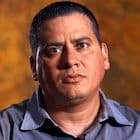
Interviews with Pablo Pacheco Ávila
Cuba
Change In Cuba?
Fidel Suarez discusses whether Cuba is changing.
Transcript
The changes Raul Castro has made are more in response to the regime’s own needs than many believe. They are cosmetic changes that are really not needed in Cuba. Cuba needs radical changes in all aspects of life: political, economic, social.
Raúl is trying to keep himself in power as long as he can and then let someone else come in and fend for himself. I do not think those are the changes that Cuba needs right now. Cuba needs free elections, respect for human rights, so Cubans can invest in their own island and not have to leave Cuba to seek a better future. So that Cubans do not have to be expelled for expressing their political views on Cuba.
The changes made by General Raul Castro do not correspond to Cuba’s needs. Rather he does it for his own interests, to continue in power and to survive this terrible crisis that is facing the island in every aspect I mentioned.
I would tell the American citizen … (and I am grateful to the United States because they have always lent a hand to the politically persecuted, Cubans, from the time of José Martí and [Father Felix] Varela) but I tell the American citizen today, if you go to Cuba, see how the ordinary Cuban lives. Do not stay in a hotel and live like a tourist.
[Jose Marti (1853 – 1895) is recognized as Cuba’s national hero. Marti was a writer and essayist who advocated for Cuban independence from Spain. Father Felix Varela (1788 – 1853) was a Cuban-born Roman Catholic priest. He was an advocate for Cuban independence, an anti-slavery activist, and a social reformer.]
That Cuba is beautiful. But when you have to face the reality of Cuba, where the average Cuban does not have a glass of milk every morning, his child does not have good shoes for school, he cannot freely express what he feels, he doesn’t have the most basic freedoms. Then tell me if that´s what they want for the United States.
Do not be confused. Cuba is a ruin, a large prison, where citizens are fearful because the regime has implanted fear. Where citizens take refuge in the double standard because the regime has implanted the double standard.
About Pablo Pacheco Ávila
Pablo Pacheco was born in the city of Puerto Padre in Cuba’s Las Tunas province.
He first became involved with the opposition in 1998 when he joined the Cuban Human Rights Foundation, an organization that monitors and denounces human rights violations and supports Cuban political prisoners. He became the foundation’s secretary.
In 1999, Pablo started a career as an independent journalist. He worked for several independent news agencies such as the College of Independent Journalists of Camaguey, the Avila Independent Journalists Cooperative, and the web-based Cubanet, an online compendium of independent news stories offering alternative perspectives from those of government-controlled media.
On March 19, 2003, Pablo was arrested during a massive government crackdown on activists known as the Black Spring. He was one of 75 nonviolent dissidents, human rights activists, and independent librarians arrested by security forces. In a summary judicial proceeding, he was sentenced to twenty years in prison.
During his incarceration, Pablo helped to establish a blog called “Voices Behind Bars” with dissident bloggers Iván García, Yoani Sánchez and Claudia Cadelo. The platform featured testimonials from political prisoners describing conditions and abuse inside Cuban jails. Their stories were recorded over the phone during the prisoners’ limited telephone privileges. In the event that guards cut off the phone lines, relatives would smuggle written testimonials out of the prison for inclusion in the blog. In 2009, “Voices Behind Bars” was recognized as the best of 187 Cuban opposition blogs in the Una Isla Virtual (A Virtual Island) competition.
After 7 years, Pablo was freed when the Catholic Church and the Spanish government negotiated the release of the 75 Black Spring prisoners. Pablo went into exile and currently lives in Miami, Florida, with his wife and son. He continues to share his experiences from his time in prison and remains active in Cuba’s freedom movement.