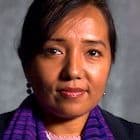
Interviews with Khin Lay
Burma
International Sanctions
“We believe lifting sanctions should benefit ordinary people, not the cronies and military officers”
Transcript
But we believe that lifting sanctions should benefit ordinary people, not the cronies and military officers. That’s why we remind, not only sanctions coordinators, [United States] senators, and [United States] congressmen, and the other government officials so not to rush – not to rush to make – lift the sanctions or any other things, investment. So please take care. The critical point is after the 2015 elections [in Burma]. So we should wait and see until the 2015 election. And about the sanctions issue is that – yeah. But, you know, after the 2015 elections, if NLD [the main Burmese opposition party, the National League for Democracy (NLD)], Aung San Suu Kyi’s party, won landslide victory, so whether the ruling party will hand over the power to them or not, this is a very critical point we believe like that [Aung San Suu Kyi is the leader of NLD. She led the NLD to victory in the 1990 elections, but the military government ignored the results and put her under house arrest. She was awarded the Nobel Peace Prize in 1991].
But if all the sanctions are lifted, we don’t have leverage. So I know that the procedures to make sanctions takes time. So that’s why I’m very sorry to say that sanctions are not the best way to promote our democracy, but it’s one of the two to help our movement. That’s why we should not be very optimistic. We should be cautiously optimistic about our country’s situation.
About Khin Lay
Khin Lay is a Burmese civil society and political activist. She was born in Yangon in 1971.
She pursued a career in education, hoping to be a university professor. That ambition changed after Aung San Suu Kyi, the leader of Burma’s democracy movement, inspired Khin Lay to take an active role in freeing her country. In 1995, Khin Lay joined Aung San Suu Kyi’s National League for Democracy (NLD).
As a member of NLD, Khin Lay endured constant surveillance by the regime. In 2000, she was arrested by authorities for her involvement with the party. After five days of interrogation in which she was blindfolded and deprived of sleep, Khin Lay spent four months in Insein Prison, a facility notorious for its deplorable conditions and use of torture. She was released in 2001.
More recently, Khin Lay has focused on strengthening women’s rights and building a more robust civil society. She founded the Triangle Women Support Group, an organization dedicated to empowering Burmese women, developing their political and professional skills, as well as encouraging greater participation in public life. She believes that fostering a new generation of strong, female leaders is a key component to Burma’s democratization.