Interviews with Bogdan Borusewicz
Poland
Roots of Poland's Opposition Movement
Borusewicz discusses opposition movements that preceded Solidarity.
Transcript
The direct cause for me to organize the strike by myself and the decision to go through with it was to defend the workers whom they [the Communist regime] had started to throw out of their jobs. I decided that one needs to do this because otherwise the two years of hard work I spent on organizing the workers would be wasted. So the originating cause of the strike was political – to prevent their repression. But when the strike spread, what was needed was an appropriate mix of demands. And this was our list of demands, containing the most important political demands, but there were also economic demands.
The rebellion of the workers – which was a local one in 1976 – after the price hikes – this was an economic rebellion. But it was also a catalyst for the creation of political opposition in Poland. This formalized and organized the opposition. So we called into being the Workers’ Defense Committee (KOR), and this was the beginning of Poland’s organized political opposition. What we cited was the Human Rights Conventions, which communist Poland had signed, but which were not implemented, as well as the final act of the Helsinki Conference, the so called Third Basket, which provided for expansion of civil liberties in countries, including in the Communist countries [The “Helsinki Conference” resulted in the Helsinki Accords, an international treaty signed by 35 countries in 1975.
They guaranteed basic human rights and promoted cooperation between the Soviet bloc and western nations. Dissidents and activists in the communist countries used their governments’ signatures to the treaty to advocate for freedom and human rights.] Some things we did; we held self-education meetings, we printed the independent periodical Robotnik Wybrzeża [The Coastal Worker], provided distribution of a periodical called Robotnik [The Worker], which was an independent underground periodical out of Warsaw all that was done under the banner of the Free Labor Union.
In other places people also tried to do such initiatives – but they got smashed, and restricted or crushed. In the Tri-City [Gdansk metropolitan area] area this did not succeed – they were not able to restrict us or crush us.
About Bogdan Borusewicz
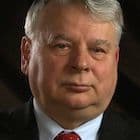
Bogdan Borusewicz is the Speaker (Marshal) of the Polish Senate. He was born in 1949 and studied history at the Catholic University of Lublin.
Under communism, Borusewicz was an ardent democracy activist. His career as a dissident started in high school, when he was arrested in 1968 for engaging with the opposition movement. In the 1970s, Borusewicz became involved with the Workers’ Defense Committee (KOR) and the Free Trade Unions of the Coast, workers’ advocacy organizations that preceded the Solidarity independent trade union.
Borusewicz rose to prominence as the principal organizer of Gdansk’s Lenin Shipyard strike in August 1980, which led to the formation of Solidarity. When martial law was declared in 1981, Borusewicz went into hiding for four years. During this time, he married fellow freedom activist Alina Pienkowska in secret. When Alina gave birth to the couple’s daughter, Kinga, Borusewicz attended her baptism in disguise for fear of being arrested by authorities. He was later arrested in 1986 and imprisoned for two years. After receiving amnesty, Borusewicz renewed his activism, serving as deputy leader of Solidarity in 1990 and 1991. He was elected to the lower house of parliament in 1990, where he served until 2001.
In 2005, he was elected to the Senate, where he was chosen by his colleagues to serve as Speaker (Marshal). In 2010, he served briefly as the interim Polish President after President Lech Kaczynski died.