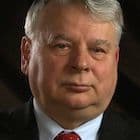
Interviews with Bogdan Borusewicz
Poland
Making Demands of the Communists
“This was not only a game with the Communist Party in Warsaw, but also with Moscow.”
Transcript
Well, [following the August 1980 strike] it was clear that something in the way of a banner would have to be devised. Something short and clear, so that the people could gather around, so to speak. We didn’t have a nationwide organization, which could provide any kind of a framework. So these demands were here to provide a kind of focal point for others to notice and to lend their support to us. The demands were drawn up in such a way that the most difficult ones were right up in the front. The political ones.
The first one was the demand for free trade unions, and the very last ones were economic. This was done by design, on my part. I knew that if we started our negotiations with the economic demands, then the authorities would respond with a [wage] raise – regardless of whether there were goods in the stores to buy. But they would give that raise. And that could be a point at which the strike is over – because some people could say, we got our money and let’s go home. So the first demand was of course the hardest for the authorities to swallow – free trade unions. What did that mean? It meant the Communist authorities’ acquiescence in the birth of a trade union, an organization which they did not control.
I knew that if we got an agreement, if we achieved it, then the next steps we took would achieve more. I also knew that this was a game not only with the Communist Party, the Communist authorities’ headquarters in Warsaw, but also a game with Moscow. So therefore there were no hints of anti-Sovietism. No hint of saying, “We are leaving the Warsaw Pact” or “We don’t like the Soviet Union.” One of my colleagues, without my approval, wrote in a demand for free elections. I crossed that one out. Because to me this was clear-cut.
What free elections meant, what that demand means is, “Give us power.” And the response could be of one kind only. Therefore, this demand for free trade unions was maximalist, and some of the people who traveled to us, especially from Warsaw, said, no, this is not feasible. For my part, I got a sense that it was feasible, when the workers started to be able to talk of nothing else except the unions, except free trade unions. So then it became their own demand. So this demand for free trade unions, of the small political opposition group, became one owned by all, by all the workers who participated in that strike. So it was clear to me that this was realistic.
About Bogdan Borusewicz
Bogdan Borusewicz is the Speaker (Marshal) of the Polish Senate. He was born in 1949 and studied history at the Catholic University of Lublin.
Under communism, Borusewicz was an ardent democracy activist. His career as a dissident started in high school, when he was arrested in 1968 for engaging with the opposition movement. In the 1970s, Borusewicz became involved with the Workers’ Defense Committee (KOR) and the Free Trade Unions of the Coast, workers’ advocacy organizations that preceded the Solidarity independent trade union.
Borusewicz rose to prominence as the principal organizer of Gdansk’s Lenin Shipyard strike in August 1980, which led to the formation of Solidarity. When martial law was declared in 1981, Borusewicz went into hiding for four years. During this time, he married fellow freedom activist Alina Pienkowska in secret. When Alina gave birth to the couple’s daughter, Kinga, Borusewicz attended her baptism in disguise for fear of being arrested by authorities. He was later arrested in 1986 and imprisoned for two years. After receiving amnesty, Borusewicz renewed his activism, serving as deputy leader of Solidarity in 1990 and 1991. He was elected to the lower house of parliament in 1990, where he served until 2001.
In 2005, he was elected to the Senate, where he was chosen by his colleagues to serve as Speaker (Marshal). In 2010, he served briefly as the interim Polish President after President Lech Kaczynski died.