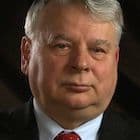
Interviews with Bogdan Borusewicz
Poland
Overcoming Fear
“We were afraid that the authorities would use force, the tanks would roll out, and then we would die.”
Transcript
We were afraid of such situations as happened in Hungary in ‘56, or in Czechoslovakia in ’68 [anti-communist uprisings put down by Soviet military power]. We were afraid of the situation, which happened in December of 1970 [worker strikes in Poland that were crushed by the regime]. December of ‘70 was for us, for all, it was something both quite proximate – and it all went down where we were at that time. So first of all – we were afraid that the authorities would use force, the tanks would roll out, and then – we would die.
There were such fears, yes. The people were very afraid then. So that’s why I suggested that we hold a Mass in the plants holding the strike – the Gdansk Shipyard, in the Gdynia Shipyard. Just to buoy the people up, the strikers up. On that first Sunday there were very few of us in the shipyard – very few, barely 300 people. Most had left – they went home, the strike was over for them.
This created a very serious danger for us that the other side would resort to force. At the same time, we were hoping by having the Mass to draw people in from the city, who would now have an excuse to approach the gate – to strengthen and support us. We were very few at the time. Yes, the fear originating from what had happened 10 years earlier was very great. But the desire for freedom was even greater.
About Bogdan Borusewicz
Bogdan Borusewicz is the Speaker (Marshal) of the Polish Senate. He was born in 1949 and studied history at the Catholic University of Lublin.
Under communism, Borusewicz was an ardent democracy activist. His career as a dissident started in high school, when he was arrested in 1968 for engaging with the opposition movement. In the 1970s, Borusewicz became involved with the Workers’ Defense Committee (KOR) and the Free Trade Unions of the Coast, workers’ advocacy organizations that preceded the Solidarity independent trade union.
Borusewicz rose to prominence as the principal organizer of Gdansk’s Lenin Shipyard strike in August 1980, which led to the formation of Solidarity. When martial law was declared in 1981, Borusewicz went into hiding for four years. During this time, he married fellow freedom activist Alina Pienkowska in secret. When Alina gave birth to the couple’s daughter, Kinga, Borusewicz attended her baptism in disguise for fear of being arrested by authorities. He was later arrested in 1986 and imprisoned for two years. After receiving amnesty, Borusewicz renewed his activism, serving as deputy leader of Solidarity in 1990 and 1991. He was elected to the lower house of parliament in 1990, where he served until 2001.
In 2005, he was elected to the Senate, where he was chosen by his colleagues to serve as Speaker (Marshal). In 2010, he served briefly as the interim Polish President after President Lech Kaczynski died.