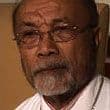
Interviews with Alberto Ricardo Da Silva
East Timor · Interviewed January 8, 2010
Necessity of Unity
Unity” means “a single determination to defend the dignity of the people, to uphold the value of the people itself.
Transcript
That is why my preoccupation is this. Timor is fine now, it has achieved its independence, and from now on it seeks to increase its intelligence, for its objectives to become even clearer, but during difficult times they all needed to be united to bring forward Timor’s destiny to the future.
So, my advice is this, my preoccupation is first and foremost: unity. Unity does not simply mean to achieve cooperation, working together, but to have one objective, to achieve unity in relation to a single determination to defend the dignity of the people, to uphold the value of the people itself. Only in this way would it be possible to achieve a national goal. If the people are divided among themselves, if they say with their lips that they are united and they come together to fight, but among themselves or interiorly, their objectives remain unclear divided, then they will not able to achieve their goal.
Therefore, according to my experience and observation, it is possible. Not just a mere unity to wage war against a foreign power, but also unity with regards to the determination; what do we really want for our country? We will then fight for this objective!
If the objectives vary, then, during difficult times, the people will give hands to each other and fight but each one maintains only their own desires and interests, then they will get along with each other, but they will not be united enough to overcome and achieve the objectives which their people need in order to defend their lives and their dignity within true democracy.
About Alberto Ricardo Da Silva
Bishop Alberto Ricardo Da Silva (1943 – 2015) was the Roman Catholic bishop of Dili, the capital of East Timor. In 1991, he was a parish priest who gave sanctuary to student activists who were threatened by the Indonesian military because of their support for Timorese independence. In November of that same year, his church was surrounded by the military-organized mobs, and one of the student activists inside the church, Sebastião Gomes, was taken out and shot to death.
On November 12, 1991, Father Da Silva said a funeral mass for Gomes. The funeral procession from the church to Santa Cruz Cemetery turned into a peaceful protest demonstration, with several thousand men, women, and children waving banners and chanting pro-independence slogans. After the procession had entered the cemetery, the military opened fire, killing an estimated 250 mourners, including children in their Catholic school uniforms. A videotape of the attack was smuggled out of the country, and the Santa Cruz massacre focused the world’s attention on East Timor, substantially increasing pressure on the Indonesian government to respect the Timorese people’s right to self-determination.
In the weeks after the massacre, Father Da Silva was subjected to repeated harsh interrogations by the military authorities. He was accused of being the “mastermind” of the demonstrations, although he insisted that he was interested only in his religious ministry, not in politics, and that this ministry had included Timorese of all political persuasions as well as Catholic members of the Indonesian military. Nevertheless, he was repeatedly threatened with imprisonment or worse. In order to get him out of harm’s way, his church superiors assigned him to study in Rome. He returned to Timor after several years and Pope John Paul II named him as Bishop of Dili in 2004. As bishop, Da Silva pressed for justice for the victims of violence during East Timor’s occupation and struggle for independence. He also encouraged the Timorese people to take part in their country’s democratic development.
He resigned as bishop shortly before his death in April 2015.