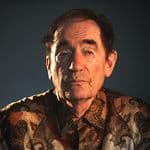
Interviews with Albie Sachs
South Africa
International Sports Boycott
“People are crazy about sports. I’m crazy about sports.”
Transcript
The sport boycott became extremely important. People are crazy about sports. I’m crazy about sports. And I remember going to Twickenham rugby grounds in the early ‘70s and I’m pretty well behaved person, polite and correct almost to a fault. That day I stood on the touch lines with others.
[The international sports boycott of South Africa refers to various international sporting leagues and committees choosing to ban competition with South African teams and athletes at varying points between the 1960s and the fall of apartheid in 1994.]
I shouted, I screamed, I booed the whites-only rugby team of South Africa like I’ve never done in my life before. And a lot of the crowd were hostile to us.
So the sports boycott had an enormous impact. It reached into active public life and the whites-only South African team was excluded from the Olympics and from any other forms of international tournament, from soccer, table tennis, swimming. The two most important areas were probably cricket, a game played throughout the former British empire, and rugby, both very strong South African games.
And rugby football, a game of strong men, somehow epitomized the power of the racist state, was now being represented by the power of these big burly rugby football players. And the people who went to watch rugby would often be raucous and tough, and they split; they divided. And there would be marchers in town and were people running onto the fields. And in New Zealand, which is a very big rugby-playing nation, it split the whole nation right down the middle. It went well beyond just sports. Australia, something similar. United Kingdom, England, also very, very – and Wales, very, very big issue.
It “conscientized” millions of people, and the argument was, “Keep politics out of sports.” The counter argument was, “Well, it´s racist South Africa´s introducing politics by reserving place in its national teams for white people only.” And eventually, racist South Africa was excluded from sporting tournaments. They had to put up big money to get “rebel tours,” they were called. And in terms of impact on consciousness sport was an extremely important area.
[“Rebel tours” were the name given to a series of unofficial cricket matches held between 1982 and 1990 in defiance of the international sports boycott on South Africa.]
About Albie Sachs
Albie Sachs was born on January 30, 1935 in South Africa and grew up under the apartheid government.
His career as a freedom and human rights activist started at seventeen, when as a second-year law student at the University of Cape Town, he became active in nonviolent, anti-apartheid protests. At 21, he began practicing law and was known for defending individuals charged under racial statutes and repressive security laws. Sachs himself was arrested by the security police, subjected to banning orders restricting his movement, and eventually placed in solitary confinement without trial for extended periods of time.
In 1966, he went into exile. After spending eleven years studying and teaching law in England, Sachs worked in Mozambique as law professor and legal researcher. In 1988, he survived a car bomb, but lost an arm and sight in one eye.
During the 1980s, working closely with Oliver Tambo, leader of the African National Congress (ANC) in exile, Sachs helped draft the organization’s Code of Conduct, as well as its statutes. After recovering from the bombing, he devoted himself full-time to preparations for a new democratic, South African constitution. In 1990, he returned home to South Africa and as a member of the Constitutional Committee and the National Executive of the ANC, took an active part in the negotiations leading to South Africa’s democratic transition. After the first democratic election in 1994, Sachs was appointed by President Nelson Mandela to serve on the newly established Constitutional Court, where he served until 2009.
Sachs has travelled to many countries sharing South Africa’s experience and discussing human rights.