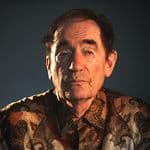
Interviews with Albie Sachs
South Africa
Apartheid
“If a black person and white person fell in love they were in serious danger.”
Transcript
It wasn’t as though we took a decision one day to be brave. We would have our political discussions and debates. We would imagine the new South Africa, this was in the 1950s, and step-by-step we found ourselves becoming closer to conflict with the state. And one has to understand this was a racist, apartheid South Africa. Race was in the constitution, which said that Members of Parliament had to be white. The Prime Minister all the way to the President had to be white.
Voters were overwhelmingly white.
The judges were white.
The Cabinet, Administration: white.
The Army: white.
The country was completely controlled and dominated by whites who constituted maybe 12-15 percent of the population; owned by law 87 percent of the land, including all the central business districts, the wealthy productive areas and black people had been driven off their land, ancestral lands, into rural slums, deeply impoverished, subject to taxation. The men had to go out and work on the farms of the whites, in the industry of the whites, down in the mines for the whites. And were treated as though they were simply migrant workers coming into what were called “White areas,” which is the great bulk of South Africa and then destined to go back to these impoverished rural areas.
It was a grossly unequal, unjust, unfair society and the unfairness was written in to the very laws justified on the grounds in those days that the whites were civilized, were superior, that come to bring enlightenment to Africa. And yet for the majority of our people their enlightenment involved being defeated in military terms, forced to carry documents, called “passes.” If they moved from one part of the country to the other they needed written authorization from whites.
They couldn’t set up home where they wanted. They couldn’t start a business where they wanted. They couldn’t move freely. In the cities at night after the curfew hour a siren would go 9:00, black people couldn’t be out on the streets without permission from a white employer.
Where were you born? I was born in the Florence Nightingale Maternity Home in Johannesburg, but black people would be born in their huts and their homes in under-resourced city areas and so on. Where you lived areas of the country demarcated for racial groups. And here in Cape Town not the beautiful slopes of Taylor Mountain with lovely views, but basically the impoverished, under-resourced areas crowded with hundreds of thousands and millions of poor black people.
The schools were segregated officially, formally. The beaches reserved, the beautiful beaches reserved for whites, with signs up “Whites Only.” Benches for whites only.
If you went to the post office to buy a stamp for your letter, you’d stand in the queue, a line “Whites Only,” “Blacks Only.”
So race dominated everything in our country. It was a constitutional principle. It was a symbol of injustice and oppression, an instrument for controlling people.
If a black person and white person fell in love they were in serious danger. If they were caught kissing they could go to jail.
So we resisted. It wasn’t a huge number of young white people, but we were very motivated.
About Albie Sachs
Albie Sachs was born on January 30, 1935 in South Africa and grew up under the apartheid government.
His career as a freedom and human rights activist started at seventeen, when as a second-year law student at the University of Cape Town, he became active in nonviolent, anti-apartheid protests. At 21, he began practicing law and was known for defending individuals charged under racial statutes and repressive security laws. Sachs himself was arrested by the security police, subjected to banning orders restricting his movement, and eventually placed in solitary confinement without trial for extended periods of time.
In 1966, he went into exile. After spending eleven years studying and teaching law in England, Sachs worked in Mozambique as law professor and legal researcher. In 1988, he survived a car bomb, but lost an arm and sight in one eye.
During the 1980s, working closely with Oliver Tambo, leader of the African National Congress (ANC) in exile, Sachs helped draft the organization’s Code of Conduct, as well as its statutes. After recovering from the bombing, he devoted himself full-time to preparations for a new democratic, South African constitution. In 1990, he returned home to South Africa and as a member of the Constitutional Committee and the National Executive of the ANC, took an active part in the negotiations leading to South Africa’s democratic transition. After the first democratic election in 1994, Sachs was appointed by President Nelson Mandela to serve on the newly established Constitutional Court, where he served until 2009.
Sachs has travelled to many countries sharing South Africa’s experience and discussing human rights.