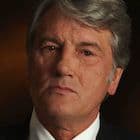
Interviews with Viktor Yushchenko
Ukraine
The Second Round of the Elections
President Yushchenko talks about fraud and the public reaction to the second round of elections.
Transcript
Well, the most interesting aspect of the period of the [November 21, 2004] second round was that the authorities were going into it like it is their last battle. They have realized that they cannot afford to lose the second round and were not ready to lose. [President Leonid] Kuchma and [Prime Minister and presidential candidate Viktor] Yanukovych thought that they have all the instruments for winning, including fraud. When the second round was over, there were several thousand complaints about legal violations during the election.
The first thing in the morning after the second round, we learned of multiple fraud schemes. Certainly, I was not able to document and take to court the lion’s share of these schemes, but several thousand such cases were taken to court. The courts did not consider a large number of these cases, but the whole picture was forming in such a way that people started to worry that the second round was falsified. The authorities did not react legally to the analysis of the alleged violations, and there was no vote count yet.
Among the people, there was forming a sense of great expectation: how will the authorities react? Election results started appear, and there were several preliminary announcements – now I am the winner, now Yanukovych is the winner, then me again, then Yanukovych again. The first day of vote counting ended – practically, all regions did not report even a third of the count needed, which they should have done. Well, and before – and late at night their fraud became clear and that maybe one day, maybe two days are left before the formal announcement.
Well, those people who, in their state of heightened expectations, do not have any further information began to gather in Khreshchatyk Street. [The most famous street in Kyiv, the Ukrainian capital. It leads to the Maidan, or Independence Square, which became a focal point for the Orange Revolution.] It was in the afternoon. I went to meet them. Wet snow was falling. I was wondering – they were so underdressed for standing at this rally, even at the time of my speech. I understood their anxiety and what feelings brought them to the Maidan.
There were perhaps 8,000, perhaps 10,000 people. I turned to them and asked them to – You know, the authorities still have time, and they are able to not produce the falsified results, and they are intelligent people, and the legal requirements are still existing – and I asked people to disperse. To disperse in order to come back tomorrow, around 10:00 or 11:00. And by then the Central Election Committee will have the official election results. The next day did not bring any results. That turned the people against the authorities even more.
Moreover, such violations as ‘parallel servers’ for counting and falsification become known. In fact, crimes which the authorities perpetrated during elections – all that started to come out as facts and actions. And significant part of these matters came to trial; the courts joined in and started working. As usual, the authorities found a way to influence majority of judges, but, as a result, that critical tone did not change the behavior of the authorities. And people demanded honest vote counts and honest results.
Several more days go by; the authorities are not able to announce the election results; on the board are manipulations based on data from 3 – 4 controllable eastern regions; public sentiment is escalating with every hour, everyone who is dissatisfied goes to the Maidan and demands an honest count. Then comes the day and the authorities very cautiously make an announcement of the voting results. However, the margins are minimal and a number of the claims brought to court are significantly greater than the votes awarded to my opponent during the election period.
The announcement of voting results does not look like an honest one and, based on evidence, it looks like a fraud; acts of ‘carousel’ voting in hundreds of voting centers and other methods of the fraud emerge. [Carousel voting is a technique where voters are transported to multiple polling places to cast multiple ballots.] And, in fact, the result was that the public does not trust or recognize the election results; the authorities bring a motion to the Central Election Committee that the elections are completed; and a confrontation is forming – from one side and from the other. People come to the Maidan, and the Maidan grows larger, and larger, and larger every day.
About Viktor Yushchenko
Viktor Andriyovych Yushchenko is a Ukrainian economist and politician. He served as President of Ukraine from 2005 to 2010. Yushchenko was born in 1954 in Khoruzhivka, Ukraine. Both his parents were teachers.
Educated as an economist, Yushchenko worked in banking and finance for much of his career. After Ukrainian independence was restored in 1991, he became chairman of the National Bank of Ukraine from 1993 to 1999. President Leonid Kuchma appointed Yushchenko prime minister. Yushchenko served in that post from 1999 to 2001. Freedom House and other watchdog groups noted a marked deterioration in civil liberties and human rights under President Kuchma, including restrictions on the media, government efforts to undermine the political opposition, political violence and even murder.
Yushchenko became active in electoral politics, winning a seat in Ukraine’s parliament in 2002. That same year, he became leader of the Our Ukraine political coalition, the leading bloc of the democratic opposition to Kuchma.
In 2004, Yushchenko launched his campaign for president, quickly becoming the leading opposition candidate. Yushchenko faced formidable odds, with little access to the media. In September 2004, Yushchenko became seriously ill with what was later diagnosed as dioxin poisoning. Though gravely wounded, Yushchenko continued his political campaign. In the October 31, 2004 first round of elections, he narrowly edged Prime Minister Viktor Yanukovych. Since neither Yanukovych nor Yushchenko won 50 percent of the vote, they met in a runoff election on November 21. Irregularities and fraud were widespread and the government proclaimed Yanukovych the winner. Public outrage led to the nonviolent demonstrations and protests of the Orange Revolution. After several weeks of protests, the government acceded to demands for a new round of elections. On December 26, 2004, Viktor Yushchenko defeated Viktor Yanukovych to become president of Ukraine.
As president, Yushchenko sought to improve Ukraine’s economy and democratic institutions. He worked to strengthen ties with the European Union and NATO. Throughout his presidency, Yushchenko was challenged by political infighting and fractious coalition governments. He unsuccessfully sought reelection in 2010, but lost to his 2004 rival, Viktor Yanukovych.
Since completing his term, Viktor Yushchenko has remained active in public affairs and politics. He currently serves as the founder and head of the Viktor Yushchenko Institute in Kyiv.