Interviews with Viktor Yushchenko
Ukraine
Running as an Underdog
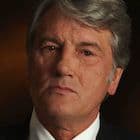
President Yushchenko discusses the unfair tactics used against him in 2004.
Transcript
Well, to begin with, my opponent, specifically, was an embodiment of the incumbent government of the time. [Viktor Yanukovych was Prime Minister during the 2004 Ukrainian presidential campaign and a close ally of then President Leonid Kuchma. He faced off against Viktor Yushchenko in the runoff elections. After losing the presidency to Yushchenko, he again served as prime minister from 2006 to 2007. In 2010, he defeated Yushchenko and other candidates to win the presidency.] He participated in the presidential race as prime minister of the country – a country where, on purpose, its totalitarian agencies have power, beginning with the security agencies and the police.
Even so, very often many other government agencies, beginning with medical clinics and centers and firemen, were involved in politics. And agencies with acronyms in their names, which I think a foreign viewer would not even care to understand. However, this was an amply serious instrument of oppression that provided colossal advantages for the authorities during the elections. That was the first point.
That government-controlled ‘current’ directed entire workplaces –especially at the government-funded institutions – towards whom their staff should vote for, how they should vote, how they can participate in ‘carousel’ voting of various types, in various types of voting fraud, etc. [Carousel voting is a technique where voters are transported to multiple polling places to cast multiple ballots.] There is another topic – accessibility to the mass media.
As a rule, two-thirds of an election campaign is based on mass media. For 2 years I did not appear on TV, for instance. I was not mentioned in newspapers. There was a complete blackout. And because of that, my strategy was made up of my climbing into a car, driving more than 130,000 kilometers, and holding several hundred meetings and rallies with my voters.
That was face-to-face communication. And I could say that, perhaps, one of the most productive election strategies, in terms of distributing campaign materials, was our Door-to-Door program when the materials, which we would want to be disseminated in the community, were handed over from one person to another.
I think the strength of my campaign was in the fact that my opponent did not respond to the situation, to the absence of reforms, and to the passive position of the authorities. And because of that, the opposition always had those strong critical arguments that the life and standards which surrounded us – everything that was created by the authorities – these are not permanent and have to be changed.
About Viktor Yushchenko
Viktor Andriyovych Yushchenko is a Ukrainian economist and politician. He served as President of Ukraine from 2005 to 2010. Yushchenko was born in 1954 in Khoruzhivka, Ukraine. Both his parents were teachers.
Educated as an economist, Yushchenko worked in banking and finance for much of his career. After Ukrainian independence was restored in 1991, he became chairman of the National Bank of Ukraine from 1993 to 1999. President Leonid Kuchma appointed Yushchenko prime minister. Yushchenko served in that post from 1999 to 2001. Freedom House and other watchdog groups noted a marked deterioration in civil liberties and human rights under President Kuchma, including restrictions on the media, government efforts to undermine the political opposition, political violence and even murder.
Yushchenko became active in electoral politics, winning a seat in Ukraine’s parliament in 2002. That same year, he became leader of the Our Ukraine political coalition, the leading bloc of the democratic opposition to Kuchma.
In 2004, Yushchenko launched his campaign for president, quickly becoming the leading opposition candidate. Yushchenko faced formidable odds, with little access to the media. In September 2004, Yushchenko became seriously ill with what was later diagnosed as dioxin poisoning. Though gravely wounded, Yushchenko continued his political campaign. In the October 31, 2004 first round of elections, he narrowly edged Prime Minister Viktor Yanukovych. Since neither Yanukovych nor Yushchenko won 50 percent of the vote, they met in a runoff election on November 21. Irregularities and fraud were widespread and the government proclaimed Yanukovych the winner. Public outrage led to the nonviolent demonstrations and protests of the Orange Revolution. After several weeks of protests, the government acceded to demands for a new round of elections. On December 26, 2004, Viktor Yushchenko defeated Viktor Yanukovych to become president of Ukraine.
As president, Yushchenko sought to improve Ukraine’s economy and democratic institutions. He worked to strengthen ties with the European Union and NATO. Throughout his presidency, Yushchenko was challenged by political infighting and fractious coalition governments. He unsuccessfully sought reelection in 2010, but lost to his 2004 rival, Viktor Yanukovych.
Since completing his term, Viktor Yushchenko has remained active in public affairs and politics. He currently serves as the founder and head of the Viktor Yushchenko Institute in Kyiv.