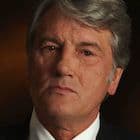
Interviews with Viktor Yushchenko
Ukraine
The First Round of the Elections
Viktor Yushchenko wins a narrow victory in the first round of balloting.
Transcript
You know, since we are talking about the first round of campaign, its results, and its specifics, I would mention, perhaps, 2 or 3 things. The first idea was roughly the idea that Yushchenko will win, but he will not be able to hold on to the election results. We were absolutely confident that there would be further fraud schemes by the authorities. No matter what the election results will be, the authorities will falsify them, because for the authorities, the strategy of victory is that their candidate comes in first. And some level of pessimism exists because confidence is pretty high and result is positive and, they will doctor the figures.
And that shared attitude, I think, disrupted plans of the authorites in the first round. And the authorities did not go deep into their fraud schemes. And when the first round results were counted, I have won the first round. And that gave us an opportunity to go into another round of the presidential races. The authorities were plotting in such a way that it was not worth it to show their fraud hand, because the contest that will decide a winner, that is going to happen in the second round. And due to that, the first round ended with my victory; even though the authorities were arranging all the fraud mechanisms for the time of second round.
This is how I would comment on the first round results. [The first round of Ukraine’s 2004 presidential election was held on October 31. Viktor Yushchenko narrowly edged Prime Minister Viktor Yanukovych, but as neither candidate won 50 percent of the vote, a runoff election was held on November 21.]
About Viktor Yushchenko
Viktor Andriyovych Yushchenko is a Ukrainian economist and politician. He served as President of Ukraine from 2005 to 2010. Yushchenko was born in 1954 in Khoruzhivka, Ukraine. Both his parents were teachers.
Educated as an economist, Yushchenko worked in banking and finance for much of his career. After Ukrainian independence was restored in 1991, he became chairman of the National Bank of Ukraine from 1993 to 1999. President Leonid Kuchma appointed Yushchenko prime minister. Yushchenko served in that post from 1999 to 2001. Freedom House and other watchdog groups noted a marked deterioration in civil liberties and human rights under President Kuchma, including restrictions on the media, government efforts to undermine the political opposition, political violence and even murder.
Yushchenko became active in electoral politics, winning a seat in Ukraine’s parliament in 2002. That same year, he became leader of the Our Ukraine political coalition, the leading bloc of the democratic opposition to Kuchma.
In 2004, Yushchenko launched his campaign for president, quickly becoming the leading opposition candidate. Yushchenko faced formidable odds, with little access to the media. In September 2004, Yushchenko became seriously ill with what was later diagnosed as dioxin poisoning. Though gravely wounded, Yushchenko continued his political campaign. In the October 31, 2004 first round of elections, he narrowly edged Prime Minister Viktor Yanukovych. Since neither Yanukovych nor Yushchenko won 50 percent of the vote, they met in a runoff election on November 21. Irregularities and fraud were widespread and the government proclaimed Yanukovych the winner. Public outrage led to the nonviolent demonstrations and protests of the Orange Revolution. After several weeks of protests, the government acceded to demands for a new round of elections. On December 26, 2004, Viktor Yushchenko defeated Viktor Yanukovych to become president of Ukraine.
As president, Yushchenko sought to improve Ukraine’s economy and democratic institutions. He worked to strengthen ties with the European Union and NATO. Throughout his presidency, Yushchenko was challenged by political infighting and fractious coalition governments. He unsuccessfully sought reelection in 2010, but lost to his 2004 rival, Viktor Yanukovych.
Since completing his term, Viktor Yushchenko has remained active in public affairs and politics. He currently serves as the founder and head of the Viktor Yushchenko Institute in Kyiv.