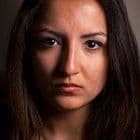
Interviews with Samar El Hussieny
Egypt · Interviewed August 3, 2012
The Role of Religion
Religion in Egypt is a key element.
Transcript
In fact religion in Egypt is a key element before the revolution and after the revolution. And it is not only the Islamic – the Islam religion; Islam and Christians, because we have one of the most powerful churches in the world. And our church also are controlling the people.
Also the Islamist forces in Egypt, they are – they’re playing a big role now in the political arena. You will find the Muslim Brotherhood; you will find some Salafist parties; you will find some independent Islamic or Islamist candidates. And they’re all there in the parliament. If you are talking about Islamist versus civilians or civic people, you will got like 70 percent of Islamists in the parliament: Muslim Brotherhood – al-Nour Salafi party, al-Wasat party, different parties.
And I think this is a very clear reflection to the – to the past work before in the lower classes, because before the revolution, the only groups that was allowed informally to go and organize themselves was the Muslim Brotherhood. And they have been working there during their – using their charity organizations, using the mosques, using some of the associations that supposed to help widows, divorced women and some of the orphans – they were there working with these classes.
And they were just concentrating about using this kind of – kind of lack of economic resources, lack of political empowerment in these specific classes. And they kept working with them. So after the revolution when it comes to voting, a real voting, they just asked them to go and vote for what they will like.
About Samar El Hussieny
Samar El Hussieny grew up in a politically oriented family in Egypt. Her father was a socialist opposition politician. She studied political science and has worked in the human rights field since 2005. She participated in several student awareness activities for youth during her college years and has been active in various civil society projects concerning human rights education, election monitoring and minority rights. She is a Program Officer at the Andalus Institute for Tolerance and Anti-Violence Studies and is pursuing a master’s degree in political science.
Samar has been an activist in the Egyptian Revolution that began on January 25, 2011. She continues to work to promote freedom and support democracy during her country’s transitional period. Samar has also been intensively engaged on initiatives related to elections in Egypt. In addition to monitoring elections and the political process, she is involved in projects relating to minority rights, social media, and transitional justice in Egypt. Samar seeks to support reform movements and non-violent revolutions in the Arab World and beyond.
Samar was among the inaugural group of the George W. Bush Institute’s Women’s Initiative Fellowship Program in 2012, a leadership program designed to empower and equip women to catalyze change.
Samar hopes to be elected to national office and is planning to run for President of Egypt one day.