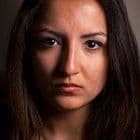
Interviews with Samar El Hussieny
Egypt · Interviewed August 3, 2012
Technology
Using technology to inform Egypt’s voters
Transcript
I think we are using the technology in a very significant way. We have our own creative ideas, especially social networks. We have been using them thanks to – since 2007. We started with Facebook. And some of us has moved to Twitter from 2009, when the Iranian Revolution happened, and we got the sense about the importance of Twitter and how they used it. So in 2010 I think the number of people who registered in – on Facebook, as an example, has increased in a very big numbers; and on Twitter also.
And we started just to collect each other doing these small events about awareness, about trainings, about how to develop yourself, how to run for office, what is the main principles for democracy, what are the main principles for freedom. And we started to spread some of the awareness – educational materials how – what is the meaning of democracy, what is the meaning of freedom, what is the meaning of peaceful protesting and what is the mechanisms of peaceful protesting?
And so people started to – people started to get together, organize themselves well and trying to do something bigger, which started with Khaled Saeed page, which mean we are all Khaled Saeed – the same case that I was talking about. And this page is specifically – it has a good role in this specific moment, because it has organized a lot of marches, a lot of protests against the ministry of interior and the torture in Egypt. So it was very effective.
And especially during the revolution, it was, like, this is our moment. And I think one of the writers has called out – ours revolution as Twitter revolution, because most of the information and most of the evidence that we have being published about what’s happening in Egypt – it was spread throughout Twitter, Facebook, some of the social networks. And we were trying to make a live stream about what happening in Egypt with some of the other websites.
And till this moment we are using social networks. We are emphasizing on being with people, but also using technology, using mobile software, mobiles any – in any kind to get together and organize ourselves, because this is kind of no limitations. In the Internet and technology you can’t limit anything. You – it’s too hard to put restrictions. And maybe this – the mistake that Mubarak didn’t aware about that. If you just has this freedom of information, and people will look at all of this – all of this information, maybe they – he will not be able to control.
About Samar El Hussieny
Samar El Hussieny grew up in a politically oriented family in Egypt. Her father was a socialist opposition politician. She studied political science and has worked in the human rights field since 2005. She participated in several student awareness activities for youth during her college years and has been active in various civil society projects concerning human rights education, election monitoring and minority rights. She is a Program Officer at the Andalus Institute for Tolerance and Anti-Violence Studies and is pursuing a master’s degree in political science.
Samar has been an activist in the Egyptian Revolution that began on January 25, 2011. She continues to work to promote freedom and support democracy during her country’s transitional period. Samar has also been intensively engaged on initiatives related to elections in Egypt. In addition to monitoring elections and the political process, she is involved in projects relating to minority rights, social media, and transitional justice in Egypt. Samar seeks to support reform movements and non-violent revolutions in the Arab World and beyond.
Samar was among the inaugural group of the George W. Bush Institute’s Women’s Initiative Fellowship Program in 2012, a leadership program designed to empower and equip women to catalyze change.
Samar hopes to be elected to national office and is planning to run for President of Egypt one day.