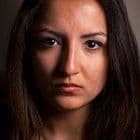
Interviews with Samar El Hussieny
Egypt · Interviewed August 3, 2012
Media Monitoring
How and why civil society can monitor the media
Transcript
The media monitoring is – specifically we are monitoring the channels and newspapers and how they are – their attitude towards the different candidates and different political forces during the elections. And we are trying to make evaluation for their attitudes, their behaviors, the spaces that they’re allocating per each political party, per each candidate.
And also we’re trying to calculate the amount of money the political parties and candidates spent on their advertisement, on their campaigns, because we have maximum range in Egypt for the campaigns. And also in the media monitoring we are doing some evaluation for the anchors, for the channels. And we are trying to give them some recommendation in order to develop themselves and giving a better media content for the audience.
It will depend about the type of – depend on the type of media that we are dealing with. The state media, they are not flexible. And they are not accepting any reports that you can submit to them, though we were not applying these reports as have-to-do report. It just a report about your attitude, how to improve it, and this is for your good and for the audience. But they are not accepting that. And maybe because most of the content that is presented in the state media, it’s something like they’re forced to do that. This is something bigger than them.
And if we came to the independent media, we can differentiate between two type. The very independent media, and they will accept and they will – they will welcome the reports, and they will try to work with you about it and will thank you even about your efforts and will ask you to complete their assessment and evaluation.
But there is another type of the independent media, which is owned by some of the businessmen who are related to the past regime. And they will not – they will not like the – this type of monitoring.
About Samar El Hussieny
Samar El Hussieny grew up in a politically oriented family in Egypt. Her father was a socialist opposition politician. She studied political science and has worked in the human rights field since 2005. She participated in several student awareness activities for youth during her college years and has been active in various civil society projects concerning human rights education, election monitoring and minority rights. She is a Program Officer at the Andalus Institute for Tolerance and Anti-Violence Studies and is pursuing a master’s degree in political science.
Samar has been an activist in the Egyptian Revolution that began on January 25, 2011. She continues to work to promote freedom and support democracy during her country’s transitional period. Samar has also been intensively engaged on initiatives related to elections in Egypt. In addition to monitoring elections and the political process, she is involved in projects relating to minority rights, social media, and transitional justice in Egypt. Samar seeks to support reform movements and non-violent revolutions in the Arab World and beyond.
Samar was among the inaugural group of the George W. Bush Institute’s Women’s Initiative Fellowship Program in 2012, a leadership program designed to empower and equip women to catalyze change.
Samar hopes to be elected to national office and is planning to run for President of Egypt one day.