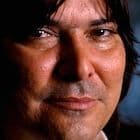
Interviews with Regis Iglesias Ramirez
Cuba
Religion in Cuba
How freedom of religion is suppressed in Cuba.
Transcript
The Catholic Church has stood firm even during the years of greatest repression. It managed to survive this repressive and oppressive state, even maintaining what little space they were allowed to keep. In a state like the Cuban one, it is very complicated for the Church or any type of religious institution to reach the community, because by not having any access to the media or by depending on a specific office of the Cuban Communist Party for things like the approval for establishing a church or religious group, or being able to hold religious processions or appear on a television or radio show, and when this all depends on a department called the Office of Religious Affairs of the Cuban Communist Party, it is very difficult to carry out the ministerial work that every church or religious group needs to perform to transmit their purposes or precepts.
And it is within this environment where not only the Catholic Church, but also all other denominations, be they Christian or not, have to carry out their work. Remember that for many years in Cuba, when applying for a job, people were demanded to state if they were religious or not, and to state what kind of religion they practiced, if any. The Cuban Military Junta fancy themselves a religion that one must join not as free people, but as a slave who depends on a vengeful god. A god that may smite more than he rewards, but one who makes all the decisions nonetheless.
By considering themselves gods and the owners of people’s lives, they would basically hate for there to be a kind, loving God, or a God that proclaims human freedom. That God would be too much competition for them, and this is intolerable for people who have such an erroneous concept of themselves and who think of themselves as the owners and gods of the Cuban revolution.
About Regis Iglesias Ramirez
Regis Iglesias Ramirez is a Cuban political and civil society activist and a former prisoner of conscience. He was born in Havana in 1969.
He became a member of a dissident group, the Christian Liberation Movement (MCL), in 1989. The MCL was founded by the late Cuban dissident Oswaldo Paya, who died under mysterious circumstances in a car accident in 2012. Regis Iglesias Ramirez became the MCL’s spokesman and a member of its Coordination Council in 1996. He was nominated as a candidate to the Cuban Parliament in 1997, but his candidacy, along with those of colleagues from the MCL, was rejected by the regime’s electoral authorities.
He is a member of the National Executive of the Citizens Committee of the Varela Project, a civil society initiative advocating for free elections and improved human rights in Cuba. The Varela Project gathered signatures from Cuban citizens in favor of a plebiscite, as permitted by the Cuban constitution. The communist government refused to call the plebiscite.
In 2003, Regis Iglesias Ramirez was among 75 nonviolent dissidents and activists arrested by the Cuban regime in what became known as the Black Spring. He was sentenced to 18 years in prison for crimes against the state. In 2010, he was released in a deal brokered by the Roman Catholic Church and was sent into exile in Spain, where he remains as a political refugee.
Regis Iglesias Ramirez has published several books of poetry and contributed to various literary anthologies. His articles have appeared in various publications in Spain and elsewhere. Since the mid-1990s, he has been associated with the Independent Press Bureau of Cuba, the New Cuban Press Agency and the Manuel Marquez Sterling Society of Independent Journalists in Cuba.