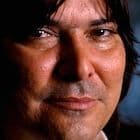
Interviews with Regis Iglesias Ramirez
Cuba
Life in a Cuban Prison
Regis talks about conditions in Cuban prisons.
Transcript
Life in a Cuban prison, like the one we were in, went through different stages. We weren’t always in the same situation. We had a very rough beginning, by being transferred to high security prisons where we couldn’t see each other, even though those who had been arrested in the spring of 2003 were right next to each other. We had a visiting schedule every three months under which we were denied our families’ home cooking. I must stress the home cooking part because the food given in the Cuban prison system is very limited, and it’s hard to stay healthy since the food provided is very scarce and of very poor quality.
The families have to bring what we call food bundles for the inmates, so you can complement your diet every now and again, when you have visitors. We had that family visit every three months, but without the right to receive food. We would receive food every fourth month, and we could have conjugal visits every fifth month. This was the most severe regime, in which, like I mentioned before, we were isolated from each other despite actually being together, because we couldn’t see each other from within the cells at any point during the day. There were columns in place that didn’t even allow you to see your neighboring partners by using a mirror. That was in the beginning.
We had no access to phone calls, to televisions or radios, and the cells were very foul smelling, full of insects and rodents. There were rats hanging from the ceiling, they came in and out of the cells, like it was their home. There were mosquitoes, which are unbearable in the Cuban heat, and we had to make due amidst these conditions for a long time. Afterwards, the situation changed a little and they started to take us to lower security prisons, or rather lower severity prisons. We even spent time in some cells where, if you stand in the middle, you can touch both walls with your hands. It was like this until, not all of us, but many of us were taken to prisons where we could finally go out and walk around the prison’s sports field.
We couldn’t do this before. Before that, we didn’t even have the right to go outside during the day, but towards the end we could go outside once a week and walk around to get some sun, and every now and then maybe even meet up with some of our partners. But this all happened during the time when we passed from a totally isolated coexistence to the coexistence with actual criminals like murderers, pimps, and drug traffickers. Common criminals with whom we had to live on a daily basis, in cells that could very well be for eight to twelve people, but they were actually holding up to forty-six inmates. I was once in a cell with thirty-five people, although it was more apt for eight people, and from those thirty-five, twenty-eight had been convicted of crimes like murder. Luckily I never had any sort of problem with other inmates. They always respected me.
About Regis Iglesias Ramirez
Regis Iglesias Ramirez is a Cuban political and civil society activist and a former prisoner of conscience. He was born in Havana in 1969.
He became a member of a dissident group, the Christian Liberation Movement (MCL), in 1989. The MCL was founded by the late Cuban dissident Oswaldo Paya, who died under mysterious circumstances in a car accident in 2012. Regis Iglesias Ramirez became the MCL’s spokesman and a member of its Coordination Council in 1996. He was nominated as a candidate to the Cuban Parliament in 1997, but his candidacy, along with those of colleagues from the MCL, was rejected by the regime’s electoral authorities.
He is a member of the National Executive of the Citizens Committee of the Varela Project, a civil society initiative advocating for free elections and improved human rights in Cuba. The Varela Project gathered signatures from Cuban citizens in favor of a plebiscite, as permitted by the Cuban constitution. The communist government refused to call the plebiscite.
In 2003, Regis Iglesias Ramirez was among 75 nonviolent dissidents and activists arrested by the Cuban regime in what became known as the Black Spring. He was sentenced to 18 years in prison for crimes against the state. In 2010, he was released in a deal brokered by the Roman Catholic Church and was sent into exile in Spain, where he remains as a political refugee.
Regis Iglesias Ramirez has published several books of poetry and contributed to various literary anthologies. His articles have appeared in various publications in Spain and elsewhere. Since the mid-1990s, he has been associated with the Independent Press Bureau of Cuba, the New Cuban Press Agency and the Manuel Marquez Sterling Society of Independent Journalists in Cuba.