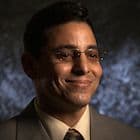
Interviews with Normando Hernández
Cuba · Interviewed January 11, 2011
International Support for the Cuban Opposition
Discusses the importance of international support for dissidents.
Transcript
The opposition in Cuba is very poor in terms of resources. The dissident movement is just a poor movement and the government tries to smother it so that they don´t have the time to oppose them. The government tries to squeeze them economically so that they are forced to commit crimes and put them in jail for these common crimes. There is an external alliance of the Cuban people and the dissident movement opposing the Cuban government, along with the U.S. government.
And the opposition doesn’t need what they have given them, not even double, triple, or quadruple of what they have spent. We need support, the support of the United States and of all democratic governments in the world. To dissolve the fascist government of the Castro brothers. The support of all of the NGOs of the world to dissolve the fascist government of the Castro brothers. We need it. The opposition and the dissidents is not interested in the Cuban government. The last thing that they want to think about is the Cuban government. We do not want them in power anymore. The term “help” can be confusing. It is a very general term.
Sometimes we talk about help and we think that it is financial help or some other direct help. But there also exists moral support. And moral support, this moral acknowledgement of the opposition and of the dissidents is the recognition that was needed all along within Cuba. The opposition and the Cuban dissidents need material things, but they also need spiritual and moral support. And we have a lot of governments around the world that have given us this kind of help. Help from the government of the Czech Republic, the government of Spain and the European Community. There are a number of governments. Poland, for example.
I do not want to keep on mentioning more because I may offend some that I did not mention. There are a lot. The European Union in a broad sense when the government is sincerely concerned about the Cuban people. There are even very decent organizations in favor of the opposition movement and the Cuban dissidents against the Cuban government. But unfortunately these positions are not at the level that the opposition movement wants them to be. The Cuban opposition movement is asking for more. Why? Because through solidarity, when it is united from the outside to support the opposition movement, the dissidents within Cuba will accelerate change by transitioning to a system that recognizes liberty and democracy in my country.
All of this depends on the types of presidents that exist in these governments, on political and economic balances and the particular interest of each country. But all of this has its pros and cons. But yes, we have received support. Not at the level that we want it to be, but we have received support.
About Normando Hernández
Normando Hernández is an independent journalist who has dedicated his career to providing alternative sources of news and information in Cuba. In 1999, he co-founded the Cuban Foundation for Human Rights, and in 2000, he established the Camaguey Association of Journalists, the first independent organization in Camaguey province since 1959. Declared a “prisoner of conscience” by Amnesty International following Cuba’s “Black Spring” (2003–2010), during which dozens of dissidents and journalists were imprisoned for their activism, Mr. Hernández was exiled to Spain in 2010 and has since resettled in the United States.
The author of numerous articles and publications, including the book El Arte de la Tortura: Memorias de un Ex Prisionero de Conciencia Cubano (The Art of Torture: Memories of a Former Cuban Prisoner of Conscience, 2010), he has received several journalism and human rights awards, including the Norwegian Writers Association’s Freedom of Expression Award (2009), the PEN American Center’s PEN/Barbara Goldsmith Freedom to Write Award (2007), and a special mention by the Inter-American Press Association for excellence in journalism (2003). Mr. Hernández is currently a Reagan-Fascell Fellow at the National Endowment for Democracy, where he is examining the Cuban communications monopoly and considering strategies by which independent journalists may combat totalitarianism.