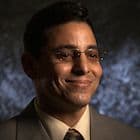
Interviews with Normando Hernández
Cuba · Interviewed January 11, 2011
Background
Normando Hernandez discusses his background.
Transcript
In the beginning of 1990 I entered the university in Camagüey, the province where I lived in Cuba, to study the methodology to build machines. When I started studying philosophy, the Marxist philosophy in Cuba, I realized that the Cuban government would say something completely different to what really happens.
There, as a student, I began to differ from the official statements and wanted to become a dissident of thought . Because the truth is, at that moment I didn’t know what kind of ideology I was going to have. And unfortunately, I was expelled from the Instituto Superior Pedagógico José Martí de Camagüey.
The next year I entered another university to study law. I had to lie to enter because I had already been expelled from a university and they wouldn’t have allowed it. When they realized it and found out, they expelled me. At that time in Cuba there was a very characteristic phrase to classify this type of people: I was the ugly duckling in the family.
I was also fired from my job as a professor of technical subjects at the Instituto Tecnológico de las Cruces in Camagüey. And my life changed drastically. It was a 360 degree transformation. My family told me that I was crazy, asking me why was I behaving that way, why was I expressing myself that way, about what I wanted, what I was going to do. If I changed my activities, perhaps the change would make things even worse than what they already were.
My family, my friends, even my teachers asked me these questions every day. And honestly, at that time I had no political conscience, I had no political knowledge. I barely knew what human rights were. I didn’t even know the Universal Declaration of Human Rights.
There was simply a common awareness on how bad the situation was in Cuba. That the government wasn’t taking right action. And I always gave a simple answer. I always said: “Look, it’s bad, but no matter how bad it is, what comes next will be better.”
Later on I became aware of and listened to Radio Martí a lot, I heard the news through the only radio station available nowadays in Cuba, Radio República to have an alternative to the information given by the Cuban government. There I started to learn about human rights activism, I learned about leaders and organizations within Cuba in favor of human rights. I learned about the party that fought for human rights in Cuba in the province of Camagüey. And I was able to join this party.
That is when I started my political activity to defend human rights. I became a human rights activist in Vertientes, the municipality where I was born in the province of Camagüey. There, we did a little bit of everything. We distributed statements about human rights, we gave lectures about how people could defend their rights, and I informed the people. And we made propaganda to attract people to join our party.
Those were many years of living in fear, many years of repression. In 1998, I started getting closer to Juan Carlos González Leiva, founder of the Fundación Avileña Pro Derechos Humanos, which one year later became the Fundación Cubano de los Derechos Humanos, an organization that I co-founded. Through this foundation, we were able to break the silence in the country’s eastern central area.
We created independent libraries and press agencies, we gave many lectures, we distributed material and as the Cuban government would put it, it was subversive. We also distributed magazines, the Disidente magazine for example, the Revista Hispano-Cubana, and every type of material. La Patria, which is a program made by 4 Cuban dissidents that makes statements criticizing the political party.
We had writing sessions in several provinces like Sancti Spiritus, Ciego de Ávila, Camagüey and Las Tunas. We provided training on journalism techniques. In 2000, journalism became a need, more like a passion to me. Journalism is like a bug, which will sting you and you’ll never heal. Press agencies monitored the situation regarding human rights in that area. And it basically provided alternative information, with no censure about the situation in Cuba, to Cubans as well as the rest of the world. So, on September 18, 2000, I founded the Colegio de Periodismo Independiente de Camagüey. I started to teach writing and journalism techniques, and we launched our agency.
Basically, we started working with Cubanet with their headquarters in southern Florida, in Miami. In 2003, well, 4 days before the Black Spring of Cuba in 2003, I had reviewed printing tests for the magazine Luz Cubana, a social and cultural magazine that was to be edited by the Colegio de Periodismo Independiente de Camagüey. The government was really upset because the Colegio de Periodismo Independiente de Camagüey was the first press agency of its kind created in the province after 1959. And we really broke the silence. We informed about absolutely everything that happened in the area.
About Normando Hernández
Normando Hernández is an independent journalist who has dedicated his career to providing alternative sources of news and information in Cuba. In 1999, he co-founded the Cuban Foundation for Human Rights, and in 2000, he established the Camaguey Association of Journalists, the first independent organization in Camaguey province since 1959. Declared a “prisoner of conscience” by Amnesty International following Cuba’s “Black Spring” (2003–2010), during which dozens of dissidents and journalists were imprisoned for their activism, Mr. Hernández was exiled to Spain in 2010 and has since resettled in the United States.
The author of numerous articles and publications, including the book El Arte de la Tortura: Memorias de un Ex Prisionero de Conciencia Cubano (The Art of Torture: Memories of a Former Cuban Prisoner of Conscience, 2010), he has received several journalism and human rights awards, including the Norwegian Writers Association’s Freedom of Expression Award (2009), the PEN American Center’s PEN/Barbara Goldsmith Freedom to Write Award (2007), and a special mention by the Inter-American Press Association for excellence in journalism (2003). Mr. Hernández is currently a Reagan-Fascell Fellow at the National Endowment for Democracy, where he is examining the Cuban communications monopoly and considering strategies by which independent journalists may combat totalitarianism.