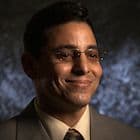
Interviews with Normando Hernández
Cuba · Interviewed January 11, 2011
Does the Opposition Have Support in Cuba?
On how average Cubans view the opposition and some of its leading figures.
Transcript
The situation in Cuba is unique because unfortunately any person outside of Cuba knows more about Cuba than the Cuban themselves who live on the island. The constitution of the Republic of Cuba, that piece of paper written by Jose Martí, that constitution that is completely anti-democratic- liberticide is stipulated in Article 53 where it defines very clearly an information monopoly. It states that only those who conform to the socialist ideas have permission to write and publish. To conform to the ideas of socialism and communism.
Anyone who opposes this does not have the freedom to write and publish. If the Cuban population recognizes these leaders, it is because these leaders have been able to represent a section of their society. Or by means of communicating to the masses controlled by the state like a roundtable or the news. These forms of media with their very unique ways to lie to the people were recognized by Fidel Castro in a statement he made at the Assembly of Latin American Sociologists in 2003. And how did I know about this? Through the Cuban media.
They see them as mercenaries, as corrupt people, as people with their own agenda. As a person who is not interested in the Cuban population. They are against everything. They are fighting so that the Cuban people do not live in misery anymore, to live based on need and they live more exploited than before. Unfortunately that´s how it is. But that is why the Cuban people need more information. There has to be a way to create media in an independent form, an alternative form of information without the daily censorship in Cuba. And by means of this media, these leaders who are respected people can be known to the Cuban people. They would be able to give their discourses, programs, political and ideological thoughts so that the people can begin to follow them.
Practically, there is a state of silence in Cuba. The leaders do not allow people to leave their houses. Jose Luis García Pérez practically lives as a recluse in his house. He cannot leave, cannot even go to the front porch of his house because the police will come quickly, enter his house, and put him back inside. He is to stay in the house or be arrested. And that´s how a lot of the resistance leaders live in Cuba. That´s the reality of those who live and grow up in Cuba. A lot of people who listen to Radio Martí are sympathizers. 100% of them although I do not know them personally but I have heard them speak.
About Normando Hernández
Normando Hernández is an independent journalist who has dedicated his career to providing alternative sources of news and information in Cuba. In 1999, he co-founded the Cuban Foundation for Human Rights, and in 2000, he established the Camaguey Association of Journalists, the first independent organization in Camaguey province since 1959. Declared a “prisoner of conscience” by Amnesty International following Cuba’s “Black Spring” (2003–2010), during which dozens of dissidents and journalists were imprisoned for their activism, Mr. Hernández was exiled to Spain in 2010 and has since resettled in the United States.
The author of numerous articles and publications, including the book El Arte de la Tortura: Memorias de un Ex Prisionero de Conciencia Cubano (The Art of Torture: Memories of a Former Cuban Prisoner of Conscience, 2010), he has received several journalism and human rights awards, including the Norwegian Writers Association’s Freedom of Expression Award (2009), the PEN American Center’s PEN/Barbara Goldsmith Freedom to Write Award (2007), and a special mention by the Inter-American Press Association for excellence in journalism (2003). Mr. Hernández is currently a Reagan-Fascell Fellow at the National Endowment for Democracy, where he is examining the Cuban communications monopoly and considering strategies by which independent journalists may combat totalitarianism.