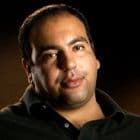
Interviews with Mahmoud Salem
Egypt · Interviewed January 10, 2011
Tahrir Square
You continue fighting because you realize that they've already done everything that they could to strike fear in you.
Transcript
February 3rd was right after the camera incident, the next day. I had left Tahrir about an hour before the camera incident. And I was stuck in my neighborhood Areleopolis, which was cut off from the rest of the city by the curfew, which was at 3:00 p.m. So I sat there for a good I don´t know, 16 hours, watching TV, watching people that I know were getting shot at and killed and beaten and screaming on TV, and feeling completely helpless. And so, the next day– and, at the same time, it was the same day in which the internet had gotten back to Egypt.
So, when we opened up Facebook, whatever, we were surprised to find lots of Mubarak pictures. You know, people putting Mubarak as their profile picture on Facebook. You know, which was all of our friends who, somehow, we were not contacting during the revolution. Like people that, you know, we just couldn´t reach. And, apparently, they were anti the revolution. And they believed what our state TV was telling them. So I wrote a post that got really famous that day. I called it, “Egypt right now.” Where I basically refuted every stupid claim that, you know, the state media has published, and my own friends, even.
And I told them that, “I´m going to go and get some medical supplies and head towards Tahrir and try to help the 1,000 people who are injured from the camera incident. A male friend of mine and three female friends decided to come along. They had told us to come through Talaat Harb Square. And I came with the car, just thinking I´m going to get the supplies and get in so I can leave here. All right, with the– there are some people there– immediately showed they were not our people. They immediately tried to attack the car. We had to remove the car. So I escaped with the car.
I went opposite actually, and toward Harb Street. And I took a wrong right on Adly Street, trying to escape. And there were five police officers. The girls immediately were like, “Police. Police. Stop the car. You know, they will protect us.” And I must have had a serious lapse of logic at the time. But, in reality, I was running from people who were trying to kill me, and I was in lots of traffic, and there was no escape. They had barricaded the entire area, secured it completely. So we stopped to get out. I told the police officers like, you know, “You need to help us. There are people who are attacking us. We have girls in the car.” “So what are you guys doing here?” “Oh, we´re trying to help the people who are– TV said, ´Get medical supplies and come help.´” You know but, anyway, any– “If it´s possible, just get the girls to leave.” You know, I mean, we were just trying to get those girls home.
So they asked for IDs. And they asked for the car key. And they announced that our IDs are fake, “They´re not really Egyptians. Those are fake IDs.” And they basically had ten plain-clothed police officers there just to rile people up. You know? And they were just attacking us and beating us inside the car and waiting outside the car. And basically, you ended up with people shaking the car, trying to like, you know, grab you inside the car, people jumping on top of the car– plain-clothes people and police people trying to flip the car or move the car. You know, people bringing in gasoline. They´re throwing it on the car, and they´re like, “We´re going to burn you guys alive.” There were people that were bringing out rope. They´re like, “No, we´ll just lynch them.”
Like it was a fantastic 45 minutes of just getting beaten, getting thrown at– just having rocks thrown at you. And they had taken all our phones. And they were using them to terrorize people who were calling. Which was interesting, because– and a friend of mine– the news of me getting arrested that day broke out as follows: My friend in the States, he called my phone, and the guy who held the phone was like, “Yeah, we have them. We´re come after you too. Blah, blah, blah, blah, blah.” So he went online and he said that I got arrested. Which was interesting, because I was still getting beaten up in the street. Technically.
So I was taken in for about four to five hours and then let go because, apparently, there was way too much pressure from both internationally and nationally and family-wise to get me out. And when I went back home, I called CNN, and I called everybody. And I announced my name and my face and everything. It was the first time I revealed my identity. And I only did it because I realized that I had to hold the police officers accountable for what they´ve done. I can´t hold them accountable if I´m anonymous. Doesn´t really work that way. So I´ve done this. And I remember, the first day, I was so angry, you know, that this has happened to me, so angry. And then, the next day, I was paralyzed by fear. Literally. “Those are not only the police who are attacking me; those are regular Egyptians, as well.” You know– you just– they know now. You just announced– you suddenly, you´ve announced your identity. And now, you´re, you know, challenging the whole thing in the wind, whatever.
And it took me like a day to calm down from the fear and be pleased by something very much different. It was a feeling of self-confidence. It was like, “Listen. You got shot at; you got beaten; you got arrested. You´ve– what else are they going to do? Arrest? You got arrested. They´re going to torture you? Is that like beating you up? Because they´ve done that. They´re going to kill you? Eh, it´s not going to matter if they kill you.” And it´s– you know, and that´s how you continue after that. You know, you continue fighting this fight because you realize that, if they´ve already done everything that they could to strike fear in you, then what else is there to do? There´s no point. And so, they probably have made a mistake of letting you live.
About Mahmoud Salem
Mahmoud Salem is a blogger, activist, writer and a business development consultant. His blog is the most prominent English-language Egyptian blog, entitled: “Rantings of a Sandmonkey” it won the best Middle East and Africa blog awards in 2006 and 2007, and Best English Blog in the Deutsche Welle Best of Blogs award in 2011 and has over 6 million unique views and his Twitter account has over 87,000 followers. His human rights activism areas have been in freedom of speech, human rights, religious rights, and women’s’ rights.
In 2005, he started the first anti-terrorism demonstration in Cairo, and participated in monitoring the Egyptian parliamentary and presidential elections.
In 2006, he was the principal organizer of the first Egyptian anti-sexual harassment demonstration and marsh after the Eid sexual harassment incidents. Incensed by Police torturing Egyptian people on videos and sparing them, he and friends collected the videos, posted them online and pushed for a public persecution of the police officers who committed those acts, leading to the unprecedented convictions of two police officers.
In 2007, he was a stage speaker at the Atlas Foundation’s 25th anniversary conference, head of the new media panel in the Qatar Foundation democracy conference and started the Tafkir project, an Arabic language blogging website to facilitate and promote ideas and online dialogue.
In 2008, he was an organizer and a team leader of 8 Egyptian bloggers for the “Egypt blogs America” project, which monitored the US elections and created a documentary film about it.
In 2009, he was picked for the Muslim Leaders of Tomorrow conference and the US Islamic Forum conference, and started the IRIS social campaign company.
In 2011, he was one of the leading voices of the January 25 revolution that brought down Egyptian president Hosni Mubarak, ran for Egyptian Parliament, started the Tweetback initiative which developed two impoverished communities in Egypt with a population over 700,000 and raised millions of pounds for social entrepreneurship projects. He also initiated the “Egyptian Bill of Rights Project,” which was later on sponsored by Mohamed El Baradei.
He co-authored two books – “Tweets from Tahrir” and “18 Days” and founded “7etan,” the first Graffiti School in Egypt. His writings have appeared in the Christian Science Monitor, the New York Times, The Daily Beast, The Guardian and various online websites.