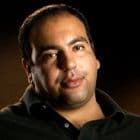
Interviews with Mahmoud Salem
Egypt · Interviewed January 10, 2011
Egypt Gets a Blogosphere
We soon realized that not only were we a source of information, but also a fantastic place to provide organizational information.
Transcript
In 2004, 2005, when the Egyptian blogosphere started, it started with about 30 blogs. And they were all secular blogs, basically. And people used to refer to it as, “the old guard.” It included me; it included Alaa; it included Ahmed Baheyya; it included a bunch of people like that. You have people on the far left, on the far secular right. And, you know, Christians and Muslims. And they´re actually finding the only space to actually discuss the issues of the country at the moment. And it´s really funny, because when you compare the atmosphere in 2004 and how far we have pushed things until now, stuff that used to be such taboos back then are now non-issues now.
So it was– I wouldn´t call it a movement. We used to joke about that because we were very different and very, well, we´re not all friends, and it´s not a monolithic entity. They´re– it´s a bunch of walking egos who have large audiences online. But, in order to deal with the media, which always needs a movement, we called it the 30th of February Movement. And very few of them got the joke. So– ´cause there is no 30th of February. But, you know, you had so many movements at the time, that we´re all like, “We are March 9 and we´re March 11, and we´re March 9.” And, you know, “Yeah, all right, February 30th.”
And we started pushing. We had many achievements, I believe. The first thing we achieved is the change of the language in the press. We allowed– we pushed for a more independent press that used more of the Egyptian language, simplified Egyptian language. So it actually made things easier for the reader than the standard, you know, Arabic, classical Arabic that they usually used. We pushed for causes of freedom of speech, pushed for causes of you know, against police brutality. Because I was pushing police brutality, the newspapers, after a while, started picking up the story. Pushing sexual harassment, the– they also started picking up the story. We just started with blogs when there was no such thing as social media; it was just simply blogs. And we soon realized that not only were we a source of information, also a fantastic place to provide organization information, too.
About Mahmoud Salem
Mahmoud Salem is a blogger, activist, writer and a business development consultant. His blog is the most prominent English-language Egyptian blog, entitled: “Rantings of a Sandmonkey” it won the best Middle East and Africa blog awards in 2006 and 2007, and Best English Blog in the Deutsche Welle Best of Blogs award in 2011 and has over 6 million unique views and his Twitter account has over 87,000 followers. His human rights activism areas have been in freedom of speech, human rights, religious rights, and women’s’ rights.
In 2005, he started the first anti-terrorism demonstration in Cairo, and participated in monitoring the Egyptian parliamentary and presidential elections.
In 2006, he was the principal organizer of the first Egyptian anti-sexual harassment demonstration and marsh after the Eid sexual harassment incidents. Incensed by Police torturing Egyptian people on videos and sparing them, he and friends collected the videos, posted them online and pushed for a public persecution of the police officers who committed those acts, leading to the unprecedented convictions of two police officers.
In 2007, he was a stage speaker at the Atlas Foundation’s 25th anniversary conference, head of the new media panel in the Qatar Foundation democracy conference and started the Tafkir project, an Arabic language blogging website to facilitate and promote ideas and online dialogue.
In 2008, he was an organizer and a team leader of 8 Egyptian bloggers for the “Egypt blogs America” project, which monitored the US elections and created a documentary film about it.
In 2009, he was picked for the Muslim Leaders of Tomorrow conference and the US Islamic Forum conference, and started the IRIS social campaign company.
In 2011, he was one of the leading voices of the January 25 revolution that brought down Egyptian president Hosni Mubarak, ran for Egyptian Parliament, started the Tweetback initiative which developed two impoverished communities in Egypt with a population over 700,000 and raised millions of pounds for social entrepreneurship projects. He also initiated the “Egyptian Bill of Rights Project,” which was later on sponsored by Mohamed El Baradei.
He co-authored two books – “Tweets from Tahrir” and “18 Days” and founded “7etan,” the first Graffiti School in Egypt. His writings have appeared in the Christian Science Monitor, the New York Times, The Daily Beast, The Guardian and various online websites.