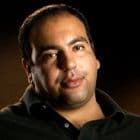
Interviews with Mahmoud Salem
Egypt · Interviewed January 10, 2011
State Security Target
Nobody shared their files. It was a really efficient police state.
Transcript
I write in English. Which means that I´m not monitored by State Security, which is the police. I´m monitored by national security, which is the intelligence services. And the intelligence services basically monitors you, unless you´re a spy, in which case, they arrest you. The harassment that I suffered in 2007, I suffered from being a street activist in a way. And it was a very interesting thing.
You need to understand that State Security did not know that I was Sandmonkey. Because national security did not share that piece of information with them, and State Security did not read English. And so, State Security had a file on me as a street activist. National security had a file on me as a blogger. Nobody shared their files. Which was brilliant. A really efficient police state, it was. Nearing the revolution, naturally– let´s see. I got beaten by sticks; I got beaten by rocks; I got shot at by rubber bullets; I got shot at by pellets, regular guns, machine guns, tear gas. There was something called white powder they used against us. I was arrested, attacked at my car, beaten up, almost publicly, it was brilliant.
It was just like being in a fight in a zombie movie, you know, the fight where you´re in the car and the zombies are outside and your car won´t run. And you keep trying to make it run, and they´re trying to grab you. That´s exactly how it happened. They beat us; they destroyed the car. They tried to flip the car. They tried to burn the car. They were going to take me out and they were going to take us out and hold us with ropes, whatever. And, in reality, when we got arrested, it kind of saved our lives. Weirdly enough.
About Mahmoud Salem
Mahmoud Salem is a blogger, activist, writer and a business development consultant. His blog is the most prominent English-language Egyptian blog, entitled: “Rantings of a Sandmonkey” it won the best Middle East and Africa blog awards in 2006 and 2007, and Best English Blog in the Deutsche Welle Best of Blogs award in 2011 and has over 6 million unique views and his Twitter account has over 87,000 followers. His human rights activism areas have been in freedom of speech, human rights, religious rights, and women’s’ rights.
In 2005, he started the first anti-terrorism demonstration in Cairo, and participated in monitoring the Egyptian parliamentary and presidential elections.
In 2006, he was the principal organizer of the first Egyptian anti-sexual harassment demonstration and marsh after the Eid sexual harassment incidents. Incensed by Police torturing Egyptian people on videos and sparing them, he and friends collected the videos, posted them online and pushed for a public persecution of the police officers who committed those acts, leading to the unprecedented convictions of two police officers.
In 2007, he was a stage speaker at the Atlas Foundation’s 25th anniversary conference, head of the new media panel in the Qatar Foundation democracy conference and started the Tafkir project, an Arabic language blogging website to facilitate and promote ideas and online dialogue.
In 2008, he was an organizer and a team leader of 8 Egyptian bloggers for the “Egypt blogs America” project, which monitored the US elections and created a documentary film about it.
In 2009, he was picked for the Muslim Leaders of Tomorrow conference and the US Islamic Forum conference, and started the IRIS social campaign company.
In 2011, he was one of the leading voices of the January 25 revolution that brought down Egyptian president Hosni Mubarak, ran for Egyptian Parliament, started the Tweetback initiative which developed two impoverished communities in Egypt with a population over 700,000 and raised millions of pounds for social entrepreneurship projects. He also initiated the “Egyptian Bill of Rights Project,” which was later on sponsored by Mohamed El Baradei.
He co-authored two books – “Tweets from Tahrir” and “18 Days” and founded “7etan,” the first Graffiti School in Egypt. His writings have appeared in the Christian Science Monitor, the New York Times, The Daily Beast, The Guardian and various online websites.