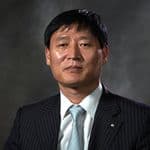
Interviews with Kim Kwang-jin
North Korea
Financing a Dictatorship
Kim Kwang-jin explains how the regime uses foreign insurance money to sustain itself.
Transcript
An insurance business in North Korea is being managed as one of the socialist economic systems so that all factories, farms should insure their properties with the state. They should pay a certain portion of their income as a premium for that insurance and the state itself uses those resources for the socialist policies, free medical care, free education, etc.
Based on this socialist insurance system, which is run in North Korean won, we just re-insure with foreign companies and we pay a higher premium to them. When there are accidents, disasters or whatever, in North Korea we claim these damages and earn foreign cash, U.S. dollars. We receive U.S. dollars and give it to Kim Jong Il as his birthday present.
[Kim Jong Il (1941 – 2011) succeeded his father and led North Korea from 1994 until his death in 2011. In the September/October 2011 edition of World Affairs, Kim Kwang-jin reveals the North Korean regime’s systematic falsification of insurance claims for foreign cash.]
So the internal insurance business is legitimate of course, according to their socialist system. But our re-insurance operation is to make foreign cash based on that internal business and then to raise funds for Kim Jong Il’s rule. So this is not legitimate business in terms of North Korean law and in terms of socialist principles. With this foreign cash and resources, Kim Jong Il and the Kim family invest in their own priorities. Their utmost priority is developing missiles and a nuclear program. They are using the lion’s share of these resources for that and then they are living a luxurious life. So this is how they invest and use this money.
They are also keeping their funds abroad in secret accounts. They are also buying [Mercedes] Benzes, Omega watches, all these luxury goods for the elite to buy their loyalty. So he uses his money for these things.
About Kim Kwang-jin
In September 2003, Kim Kwang-jin and his family rushed to an airport in Southeast Asia to fly to freedom in Seoul, South Korea. Months earlier, Kim lived a privileged life working for the government’s overseas banking operations in Singapore. Then Kim fell out of favor after he was suspected of leaking information about the regime to foreign nationals. Before being summoned back to North Korea face severe punishment, Kim made the decision to defect with his family.
During his banking career, Kim helped earn millions of dollars for what he calls North Korea’s “Royal Court Economy,” i.e., the enterprises and often illegal schemes that financially supported the country’s totalitarian dictatorship.
Since defecting, Kim Kwang-jin helped expose the North Korean government’s underhanded financial practices. He has also become an advocate for North Korean freedom and human rights. Kim currently works at the Institute for National Security Strategy in Seoul and is a columnist for Radio Free Asia.