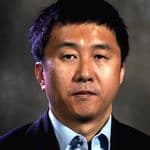
Interviews with Kang Chol-hwan
North Korea · Interviewed January 6, 2010
Life Before the Gulag
“We were part of the upper class.”
Transcript
I was born in the city of Pyongyang, North Korea. When I was 9 years old, my grandfather was purged for political reasons. I was sent to the Yodok concentration camp where I spent 10 years.
After my release, I attempted to escape to South Korea. I did and I studied at Han Yang university in South Korea and also worked as a North Korean expert reporter for Cho-sun Ilbo, Chol-sun Daily newspaper for 10 years.
To this day, I am working also as an activist for democratizing North Korea and improving its human rights situations.
1977 is around the time, when Kim Jong Il was designated the official successor of his father [Kim Il Sung]. Those people who were opposed to this new leader [Kim Jong Il] became political victims.
I believe my grandfather was politically purged for one of two reasons. Either he was implicated in this opposition towards the newly named successor, Kim Jong Il or it could have been because while my grandfather lived in Japan, he opposed Han Duk Su of Chongryon. Chongyron is the pro North Korean group of Koreans living in Japan.
[Kim Il Sung (1912 – 1994) was the founder and leader of the North Korean state from 1948 until his death in 1994. Kim Jong Il (1941 – 2011) succeeded his father and led North Korea from 1994 until his death in 2011. Chongryon, or the General Association of Korean Residents in Japan, is an organization with close ties to the North Korean government. Han Duk Su was the organization’s founder and president.]
I’m not quite sure which of these two reasons was to blame but I think it is probably because he was part of the leadership that opposed Kim Jong Il’s succession to power.
My grandfather was a member of the Workers’ Party and he was the Vice President of the Commercial Management Office of Pyongyang.
[The Workers’ Party of Korea is the communist party that has run North Korea since the state was established in 1948.]
What this meant was that he had to look after all the commercial stores and department stores in the city of Pyongyang. We were definitely part of the upper class, so to speak, also because my grandmother was a member of the Supreme People’s Assembly, which is like the legislature of North Korea.
She was also the deputy head of the Workers’ Party organization of female members. The wife of Kim Il Sung was the president and my grandmother was her deputy.
So yes, we were part of the upper class.
About Kang Chol-hwan
Kang Chol-Hwan escaped from North Korea in 1992 and has dedicated his life to bringing attention to the horrifying conditions in North Korea.
When Kang was 9 years old, the North Korean government accused his grandfather of treason and sent the family to one of its most notorious concentration camps, Yodok. Kang lived in the camp for 10 years, surviving on meager corn rations along with rats and earthworms. He and his family were forced to work in fields and mines and to witness public executions of their fellow prisoners.
Following his release from the camp, Kang bought an illegal radio receiver and began listening secretly to broadcasts from South Korea. These broadcasts allowed Kang to understand the differences between totalitarian societies, like North Korea, and free societies. Kang and a friend escaped North Korea by sneaking across the border to China and went from there to South Korea, where he lives today.
Kang described his experiences in his powerful memoir, “The Aquariums of Pyongyang.” President Bush welcomed Kang to the White House in 2005 .