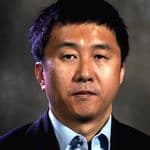
Interviews with Kang Chol-hwan
North Korea · Interviewed January 6, 2010
Child Labor
“Children are tortured even more than the adults.”
Transcript
When I first reached the camp I found that there were many kids around my age [9] because naturally, many families are sent there. Actually I would say about 30 percent of the population in prison camps are children.
The authorities send these kids in prison camps to “school.” It is called school but you are not really provided an education.
Actually what they are doing is keeping tight control over the children and also engaging them in forced labor.
Children are tortured even more than the adults in terms of the labor they are required to do, because they have to cut and carry logs around.
[Children] have to do farm work and provide labor for building houses.
I had never done that kind of hard work in my life before reaching the prison camp, so on my first day I actually almost fainted.
There were three new kids that came to the prison camp on the same day as me, and all three of these kids nearly collapsed because they were so exhausted.
We say that for children that come to prison camps, the first three months are the most critical. What this means is many kids die during the first three months.
If you can survive the first three months then people say you can survive the next three years, and if you can survive the next three years then you can survive a decade.
So once again, the first three months are really critical and many kids have a hard time surviving that period.
About Kang Chol-hwan
Kang Chol-Hwan escaped from North Korea in 1992 and has dedicated his life to bringing attention to the horrifying conditions in North Korea.
When Kang was 9 years old, the North Korean government accused his grandfather of treason and sent the family to one of its most notorious concentration camps, Yodok. Kang lived in the camp for 10 years, surviving on meager corn rations along with rats and earthworms. He and his family were forced to work in fields and mines and to witness public executions of their fellow prisoners.
Following his release from the camp, Kang bought an illegal radio receiver and began listening secretly to broadcasts from South Korea. These broadcasts allowed Kang to understand the differences between totalitarian societies, like North Korea, and free societies. Kang and a friend escaped North Korea by sneaking across the border to China and went from there to South Korea, where he lives today.
Kang described his experiences in his powerful memoir, “The Aquariums of Pyongyang.” President Bush welcomed Kang to the White House in 2005 .