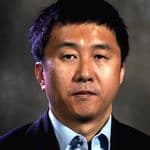
Interviews with Kang Chol-hwan
North Korea · Interviewed January 6, 2010
Conditions in the Gulag
“Every aspect of life is the worst you could imagine for a human being."
Transcript
The Yodok camp was located in the South Hamgyong Province in the middle of very high mountains. It is common for North Korea to build prison camps in areas that are surrounded by very high mountains and that was the case for Yodok as well.
[The Yodok political prison camp, officially known as Penal Labor Colony No. 15, is located about 110 kilometers northeast of Pyongyang.]
The mountainous terrain or nature itself creates a huge wall surrounding you. The mountains that surrounded the Yodok camp were about 1,700 to 2,000 meters high and in the middle flowed a stream, so if you just looked at the outer appearance it just looked like an ordinary village in a mountain area. I would say that the size of the Yodok camp is similar to that of Washington, DC in the United States.
[The Yodok Camp has an estimated area of 378 square kilometers, or 146 square miles. The District of Columbia has an area of 177 square kilometers, or 68 square miles.]
There were about 50,000 prisoners there when I was in Yodok. The camp itself was divided into two sections.
The first one is an area that is an entirely restricted area. This is for the people that can never leave the camp for life. Then there was the other section where I lived. This is for prisoners that can be released after serving time.
In terms of housing, we called it “harmonica housing,” because small houses were put together in the shape of a harmonica so to speak. Each house had one room and a kitchen.
The houses were made of mud and we didn’t have any tap water at all. When we had rain or heavy snow, the houses would leak. It looked like a house, but it was very primitive.
[The camps] do not have proper hospitals. They have places that they call clinics, but the kind of medical services that these clinics provide are very primitive. If you become ill, you cannot get treatment.
Once, I had to have one of my teeth pulled. The person in the clinic was not a dentist; he wasn’t even a proper doctor. He just removed my tooth without anesthesia and I almost fainted.
These clinics do not have enough medication, so if you come down with a cold you are not given any pills to cure that. People would die from their diseases instead of getting any kind of treatment.
The situation was very bad because when people had diseases like tuberculosis, hepatitis and other kinds of contractible diseases. They were very vulnerable.
During winter, I wouldn’t even think about taking a bath because it was too cold and warm water was not provided for us.
I had this friend, who during the spring time would always wear black socks, I thought for his work. Later on this friend fell into a mud pool, and I found that something started to peel off his feet.
It was actually the dirt that had accumulated on his feet and became so hardened that it looked like a pair of black socks.
In terms of food, we were provided around 300 to 500 grams of corn. This was a monthly ration, but it was only enough to last you 15 days.
You would have to add either some grass or vegetables and mix it all together with the corn and cook it in the form of porridge.
Otherwise, you would starve. So many people died from starvation and malnutrition in prison camps.
In terms of clothing, they gave us what they called uniforms once a year. It was made of a material called Vinylon. North Korea claims that this is some kind of textile that they created.
[Vinylon is a synthetic textile produced in North Korea.]
This cloth is very vulnerable to humidity and water, so once you wash it; the cloth shrinks almost by half.
Suddenly a long sleeve will turn into a short sleeve. You would have to connect both sleeves together to make it look like proper clothing.
And because the kind of labor we were involved in was very harsh, often this uniform would only last a couple of months, but we were only provided a uniform once a year.
We weren’t provided proper shoes either. During the winter, people would just wrap cloth or rags around their feet just to keep them from getting frozen.
Every aspect of life there is the worst you could imagine for a human being.
About Kang Chol-hwan
Kang Chol-Hwan escaped from North Korea in 1992 and has dedicated his life to bringing attention to the horrifying conditions in North Korea.
When Kang was 9 years old, the North Korean government accused his grandfather of treason and sent the family to one of its most notorious concentration camps, Yodok. Kang lived in the camp for 10 years, surviving on meager corn rations along with rats and earthworms. He and his family were forced to work in fields and mines and to witness public executions of their fellow prisoners.
Following his release from the camp, Kang bought an illegal radio receiver and began listening secretly to broadcasts from South Korea. These broadcasts allowed Kang to understand the differences between totalitarian societies, like North Korea, and free societies. Kang and a friend escaped North Korea by sneaking across the border to China and went from there to South Korea, where he lives today.
Kang described his experiences in his powerful memoir, “The Aquariums of Pyongyang.” President Bush welcomed Kang to the White House in 2005 .