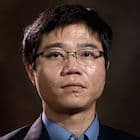
Interviews with Ji Seong-ho
North Korea
International Support
“Today, many Americans show a lot of interest in North Korean human rights.”
Transcript
I think it would be important for the international community to at least respond to the North Korean issue. I would also appreciate any kind of support that the international community could provide. My group and I have never received any kind of official assistance from the international community.
NGOs like ours are fighting under difficult circumstances, but because we are determined for the right cause, that gives us enough motivation to go on.
When I was in North Korea between 2002 and 2003, my perception of the United States started changing. North Koreans are taught that the United States is imperialist and a very bad country. I took that to be true. There was a period of time where public executions were very rampant in North Korea.
I didn’t really understand why these people had to be killed for what they did wrong. I heard from someone in China that the United States and the international community were exerting considerable pressure on North Korea to stop these types of executions and that was why the number of public executions was dropping. That was when my perception of Americans and the United States began to change.
I came to understand that there are people out there who care about the situation facing North Koreans. In North Korea, you are brainwashed into thinking that Kim Il Sung and North Korea are on the best on the planet so you don’t understand that there are other countries and other people living out there.
[Kim Il Sung (1912 – 1994) was the founder and leader of the North Korean state from 1948 until his death in 1994.]
I always appreciated that people cared about North Korea. I also appreciate the fact that countries like the United States and organizations like the United Nations care about North Korea’s human rights issues and that they highlight these issues on a global level.
North Koreans desperately need the outside world’s help. They cannot get by on their own. I’m thankful for countries like the United States for the assistance they have provided. Today, many Americans show a lot of interest in North Korean human rights. I am also thankful that many countries and the United Nations promote these issues.
I personally believe that when the international community puts pressure on North Korea, North Korea is conscious of that. The human rights violations in North Korea are beyond your imagination so I’m hoping we can seek the best ways to assist North Korea. For instance, I think there should be humanitarian intervention.
What I mean by this is North Koreans are not able to live based on what the regime supplies They have to make their living through markets and through small amounts of profit. So instead of giving official assistance to the North Korean government, I think it would be more important to try and assist the North Korean people. One way to do this is by supporting the tens of thousands of North Korean defectors living in South Korea and other countries.
If they are helped, then they can help and support their family members still living in North Korea. I think this is the most practical way to try and reach out directly to the North Korean people. I think we need to start seeking real and practical ways of assisting North Korean citizens directly instead of going through the government.
About Ji Seong-ho
Ji Seong-ho is a North Korean defector and freedom activist. Growing up in the midst of North Korea’s great famine in the mid-1990s, he helped support his family by stealing coal and selling it. While doing so, Ji Seong-ho fell off a train and crushed his left hand and foot; portions of his limbs were amputated forcing him to move around on crutches.
In 2006, Ji Seong-ho escaped North Korea with his brother. They crossed into China via the Tumen River where Ji Seong-ho nearly drowned. After crossing over, Ji Seong-ho urged his brother to leave him fearing his disability would get them both captured. With the help of brokers and religious groups, he trekked across China on his crutches and eventually reunited with his brother in South Korea.
Since escaping, Ji Seong-ho has raised awareness about North Korea and encouraged activism to improve his country’s human rights situation. He founded the organization Now, Action, Unity, Human Rights (NAUH) and initiated various projects geared towards helping North Koreans and preparing for the Korean peninsula’s unification. These efforts have included enhancing mutual understanding and social integration between North and South Koreans, broadcasting information to North Korean youth via Radio Free Asia and Far East Broadcasting, and helping defectors escape and resettle in South Korea.