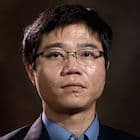
Interviews with Ji Seong-ho
North Korea
Background
Ji Seong-ho describes the severe conditions of life in North Korea, “All I could do to eat was sell coal.”
Transcript
I grew up in the city of Hakpotan-gang in Hyoereong-si of the North Hamgyong Province of North Korea. There, I completed high school.
My family was comprised of my grandmother, my parents, a younger brother and younger sister, a total of six. Two of them have since passed away, so my family here in South Korea is my mother, my two younger siblings, and me. Four of us defected from the North.
To elaborate, my grandmother died of starvation in 1995. It was a very difficult time in North Korea, and my other family members also nearly starved to death at that time. All I could do to eat was sell coal.
Even though my father worked for the Workers’ Party, he really couldn’t look after the family or start a business in the market or things like that. This is why I had to start selling coal to make a living for my family.
It was during that time that I fell from a freight train and became physically disabled [losing my hand and foot]. So when I think about what happened to myself and my grandmother it is very unfortunate.
[In the mid-1990s, North Korea experienced mass famine that resulted in an estimated three million deaths. The Workers’ Party of Korea is the communist party that has run North Korea since the state was established in 1948.]
Like any North Korean student, I received a systematic education in North Korea. One of the required subjects was the history of Kim Il Sung and Kim Jong Il.
[Kim Il Sung (1912 – 1994) was the founder and leader of the North Korean state from 1948 until his death in 1994. Kim Jong Il (1941 – 2011) succeeded his father and led North Korea from 1994 until his death in 2011.]
Because North Korea’s economic situation deteriorated since my middle school days, I was not able to obtain a proper education. After finishing high school, I was unable to continue on with my studies so there was a temporary gap after graduating. Prior to defecting in the year 2006, I took up a variety of jobs in North Korea.
As I am handicapped, I did not have regular jobs. I did my best to find work so that I could live my life. In terms of Songbun or social class, our family was in a relatively good position. My father was working for the Workers’ Party. Even though his status was not very high, my father’s siblings were quite high up the ladder and received Toyota automobiles and personal drivers from the authorities.
I believe that if I had led a normal life in North Korea, I would probably be part of the [ruling] class that oppresses the North Korean people.
[Songbun is a system used by the North Korean regime to classify citizens’ attitudes toward the regime as core, wavering, or hostile. An individual’s songbun status is influenced by his family’s status and helps determine career prospects, housing and even access to food.]
About Ji Seong-ho
Ji Seong-ho is a North Korean defector and freedom activist. Growing up in the midst of North Korea’s great famine in the mid-1990s, he helped support his family by stealing coal and selling it. While doing so, Ji Seong-ho fell off a train and crushed his left hand and foot; portions of his limbs were amputated forcing him to move around on crutches.
In 2006, Ji Seong-ho escaped North Korea with his brother. They crossed into China via the Tumen River where Ji Seong-ho nearly drowned. After crossing over, Ji Seong-ho urged his brother to leave him fearing his disability would get them both captured. With the help of brokers and religious groups, he trekked across China on his crutches and eventually reunited with his brother in South Korea.
Since escaping, Ji Seong-ho has raised awareness about North Korea and encouraged activism to improve his country’s human rights situation. He founded the organization Now, Action, Unity, Human Rights (NAUH) and initiated various projects geared towards helping North Koreans and preparing for the Korean peninsula’s unification. These efforts have included enhancing mutual understanding and social integration between North and South Koreans, broadcasting information to North Korean youth via Radio Free Asia and Far East Broadcasting, and helping defectors escape and resettle in South Korea.