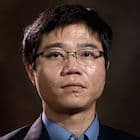
Interviews with Ji Seong-ho
North Korea
Culture of Surveillance
“We were watched closely.”
Transcript
Many things happened when four members of my family decided to leave North Korea. Actually, my mother was dissatisfied with the North Korean system.
She was the first to leave North Korea in 2004 or so and went to China. My younger sister followed suit and went to China as well. In 2006, my younger brother and I left North Korea.
My mother and younger sister’s motivation for leaving was a combination of economic and political reasons. Politically, they did not agree with the North Korean system.
As for my younger brother and me, our primary motivation was political, because we had bad feelings towards the North Korean system.
Because my father was still living back then, he was the target of [the State’s] retribution. The police summoned him to the police station and they investigated my mother and sister’s whereabouts.
Not only the police but local residents also kept a close eye on him.
If you look at how North Korea’s internal society is structured, everyone lives under a system where they have to keep watch over everyone else. When you refer to North Korea’s security authorities that can be the State Security Department, the police, and the Ministry of People’s Security.
Each of these departments is structured so that North Koreans must report to one of them. You are monitored and watched at all times without knowing exactly who is watching you.
Because people were convinced that my mother and sister had fled to China, we were watched closely. If my father went to work, it meant one of his colleagues would be monitoring him there, and when he returned home, one of our neighbors would be keeping close watch.
About Ji Seong-ho
Ji Seong-ho is a North Korean defector and freedom activist. Growing up in the midst of North Korea’s great famine in the mid-1990s, he helped support his family by stealing coal and selling it. While doing so, Ji Seong-ho fell off a train and crushed his left hand and foot; portions of his limbs were amputated forcing him to move around on crutches.
In 2006, Ji Seong-ho escaped North Korea with his brother. They crossed into China via the Tumen River where Ji Seong-ho nearly drowned. After crossing over, Ji Seong-ho urged his brother to leave him fearing his disability would get them both captured. With the help of brokers and religious groups, he trekked across China on his crutches and eventually reunited with his brother in South Korea.
Since escaping, Ji Seong-ho has raised awareness about North Korea and encouraged activism to improve his country’s human rights situation. He founded the organization Now, Action, Unity, Human Rights (NAUH) and initiated various projects geared towards helping North Koreans and preparing for the Korean peninsula’s unification. These efforts have included enhancing mutual understanding and social integration between North and South Koreans, broadcasting information to North Korean youth via Radio Free Asia and Far East Broadcasting, and helping defectors escape and resettle in South Korea.