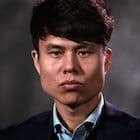
Interviews with Han Nam-su
North Korea
Songbun
Han Nam-su explains North Korea’s regime-imposed social castes.
Transcript
When you talk about social class or songbun, it can be divided into three groups. The first is considered the good songbun. These are people who are loyal to the leaders Kim Il Sung, Kim Jong Il, and Kim Jong Un.
The second are people who are in the middle. The kind of people, under songbun, that the regime would watch and then decide whether to classify them as good or bad.
Lastly, you have people who are labeled as having bad songbun. For these people, the future is bleak and the regime will always keep a close watch on them.
[Three generations of the Kim family have ruled North Korea since 1948. Kim Il Sung (1912 – 1994) was the founder and leader of the North Korean state from 1948 until his death in 1994. Kim Jong Il (1941 – 2011) succeeded his father and led North Korea from 1994 until his death in 2011. Kim Jong Un (1983 – ) assumed power on his father’s death in 2011. Songbun is a system used by the North Korean regime to classify citizens’ attitudes toward the regime as core, wavering, or hostile. An individual’s songbun status is influenced by his family’s status and helps determine career prospects, housing and even access to food.]
This is why North Koreans often say, “This person has good or bad songbun.” If you have good songbun then you have a bright future ahead of you. If you don’t, your future is dismal.
So who made this system? Of course it was the North Korean regime. They started to classify residents according to their own criteria which is why this kind of social class or songbun still exists to this day.
About Han Nam-su
Han Nam-su was destined for a life among North Korea’s elite. The son of a military officer, Han and his family were afforded privileges that ordinary North Koreans didn’t have.
Things changed after Han’s father commented on the country’s need for economic reform; he was instantly branded a traitor, tried in a military court, and executed. Han was subsequently expelled from his university and exiled to a remote corner of the country with his family.
On Christmas Eve, 1998, Han decided to leave North Korea and pursue a better life elsewhere. He crossed the frozen Tumen River into China and remained there for the next six years working various odd jobs. In 2004, Han escaped to South Korea where he started a new life in a free society.
Attending Sogang University, Han majored in Diplomacy and Political Science. While there, he decided to raise awareness of the human rights abuses happening in North Korea and founded the Young Defectors’ Alliance for North Korean Human Rights. As the organization’s leader, Han works to empower North Korean defectors through trainings, seminars, forums, and various campaigns on democratic governance.