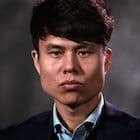
Interviews with Han Nam-su
North Korea
Escaping from North Korea
“It felt as though the heavens were falling on me.”
Transcript
It’s really very difficult to put into words the kind of emotions and thoughts that were going through my head during that time. North Korea was a place that I had lived in my entire life. I had trusted the country.
It is the place where I had my family, parents, and all of my friends. North Korea is the place where I used to play with my friends.
To think that I can never return to this place; if I were to dare put these into words I would feel as though I were dying. It felt as though the heavens were falling on me. Just the fact that I had to stay alive and breathe was extremely painful for me.
I crossed the [Tumen] River on December 24th. After living in South Korea and China, I learned that December 24th is Christmas Eve and the birthday of Kim Jong Sook, the former wife of Kim Il Sung. I just happened to choose that date. In the winter time, North Korea’s northern region is extremely cold with temperatures reaching -24 to -25 degrees Celsius. [The Tumen River is a natural border between North Korea and China. Kim Il Sung (1912 – 1994) was the founder and leader of the North Korean state from 1948 until his death in 1994.]
The Tumen river was frozen on that day, so I simply walked across. I hadn’t realized it would be such a short walk. I had always thought that it was wide and deep
but because it was frozen, I walked across and found that the distance was shorter than I thought. That is how I reached China. /
I lived in Yanji, China. It was a place where many ethnic Koreans lived. Although it was China, I didn’t have to use the Chinese language, and could communicate with everyone in Korean. Of course I was very nervous at the time, but I think I was still able to make friends and lead a life. I think things could have been worse if I had gone to another area.
My first impression of Chinese society was that it had freedom, and that it was not like what you see in North Korea. When I looked at the Chinese way of thinking and way of life, I felt that they were living liberal lives and working hard for themselves. That was astonishing for me, and it gave me an opportunity to look back at what North Korean society was like.
In North Korea, when I was planning my escape, one of the people helping me introduced me to a Chinese person. I lived in this Chinese person’s house for a year or two when I entered into China. They lived in a rural area, so I had to do farming work. I had never engaged in any kind of farming work before.
After living in the farming area for some time, I became very curious of what the city looked like, so I just left. I went to the downtown area of Yanji and came across this person who helped me get employment at a hotel in Yanji.
I worked for this hotel up until I escaped China. I did all kinds of work including cleaning. Even when I was living in Yanji, I never really contemplated going to South Korea because I thought once I had made it there, I would never be able to return to my hometown again. I made the decision in 2004. I took a train from Yanji to Beijing and entered the office of the South Korean consulate.
I was helped by professional brokers who assist North Korean defectors reach South Korea. I entered the consulate of the Republic of Korea [South Korea] and spent six months there before arriving in South Korea later that year.
About Han Nam-su
Han Nam-su was destined for a life among North Korea’s elite. The son of a military officer, Han and his family were afforded privileges that ordinary North Koreans didn’t have.
Things changed after Han’s father commented on the country’s need for economic reform; he was instantly branded a traitor, tried in a military court, and executed. Han was subsequently expelled from his university and exiled to a remote corner of the country with his family.
On Christmas Eve, 1998, Han decided to leave North Korea and pursue a better life elsewhere. He crossed the frozen Tumen River into China and remained there for the next six years working various odd jobs. In 2004, Han escaped to South Korea where he started a new life in a free society.
Attending Sogang University, Han majored in Diplomacy and Political Science. While there, he decided to raise awareness of the human rights abuses happening in North Korea and founded the Young Defectors’ Alliance for North Korean Human Rights. As the organization’s leader, Han works to empower North Korean defectors through trainings, seminars, forums, and various campaigns on democratic governance.