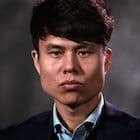
Interviews with Han Nam-su
North Korea
Cracks in the Regime
“You can find cases where a North Korean decides to escape after watching a South Korean soap opera.”
Transcript
It is true that North Korea has changed in the last 10 years. DVDs and USBs are flowing into the country. There are legal cell phones that authorities allow you to use as well as illegal ones that come through China and use one of the Chinese-based networks to make phone calls. So yes, the introduction of technology is slowly creating opportunity to change [people’s] perception in North Korea.
You can also find cases where a North Korean decides to escape after watching a South Korean soap opera on video. There are also cases where people watch these videos from South Korea and start thinking how they would like North Korean society to change.
The introduction of such technology is having an effect on the psychology of North Korea. I have to point out that these illegal systems come with equal risks because you are punished for using a cell phone or arrested for watching a South Korean soap opera. Once you take the risk of utilizing this technology, you can be punished or shot to death.
I think markets in North Korea are playing a very important role because they serve as an information and communication channel for people to talk about what’s happening in other areas as well as what’s happening in North Korea.
It is a place where people can live their lives and communicate. This is why the regime wants to tighten control over markets.
Markets contain an element of economic democratization so to speak. It is the place where people can share information and talk about the irregularities of North Korean society. In this sense, I think that the role of markets is very important.
About Han Nam-su
Han Nam-su was destined for a life among North Korea’s elite. The son of a military officer, Han and his family were afforded privileges that ordinary North Koreans didn’t have.
Things changed after Han’s father commented on the country’s need for economic reform; he was instantly branded a traitor, tried in a military court, and executed. Han was subsequently expelled from his university and exiled to a remote corner of the country with his family.
On Christmas Eve, 1998, Han decided to leave North Korea and pursue a better life elsewhere. He crossed the frozen Tumen River into China and remained there for the next six years working various odd jobs. In 2004, Han escaped to South Korea where he started a new life in a free society.
Attending Sogang University, Han majored in Diplomacy and Political Science. While there, he decided to raise awareness of the human rights abuses happening in North Korea and founded the Young Defectors’ Alliance for North Korean Human Rights. As the organization’s leader, Han works to empower North Korean defectors through trainings, seminars, forums, and various campaigns on democratic governance.