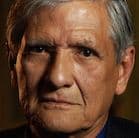
Interviews with Armando Valladares
Cuba · Interviewed February 4, 2010
What Matters in Prison
Armando Valladares remembers his 22 years in Cuban prisons.
Transcript
While in prison, I started to write and send reports clandestinely about the human rights violations that were taking place inside the prison. And that was my occupation in prison since the beginning of 1961.
That is, I spent every day, every week, every month, every year, trying to get the complaints about violations of human rights in the prisons, the torture, the murders and the abuse, known overseas. My goal is to try to create awareness in mankind, which, had it existed when I was in prison, possibly neither my fellow inmates nor I would have spent so many years in jail. That is to say, make every citizen of the world aware that when someone is being beaten, tortured, abused or violated in their dignity, it must be felt as your own affront. In other words, to look for that solidarity from one human being to another without having for one moment any kind of ideological or political considerations. That is to say, human dignity is above any political position. And in my opinion, there is no ideology that can justify the violation of human rights. A human being must be respected in his rights. The worst for us was to know that our suffering, our struggle, had no impact on anyone. It was as if we didn´t exist.
We felt terribly helpless to see how public opinion was interested in the victims of all other regimes but Cuba´s. And that was really sad. When we occasionally got the news that someone somewhere in the world remembered us, that would give us the strength to keep resisting. We felt that there was someone in the world, even though we may not even have known who it was, who knew that we existed, and that was sort of a satisfaction amid the complete abandonment that Cuban political prisoners suffered for 50 years.
About Armando Valladares
Armando Valladares, a poet, human rights advocate, and former diplomat, was a political prisoner in Castro’s Cuba for 22 years. After international pressure led to his release, he emigrated to the United States and served as U.S. ambassador to the United Nations Human Rights Commission from 1988 to 1990.
Valladares was a Cuban Postal Bank employee who was arrested in 1960 when he refused to display a sign on his desk that endorsed Communism. Valladares, then 23 years old, was convicted of being a “counter-revolutionary” and spent 22 years in prison. He was adopted by Amnesty International as a prisoner of conscience, and his prison memoir “Against All Hope” became an international bestseller and raised the profile of the campaign for his release. This campaign finally succeeded after then French President Francois Mitterand made a personal appeal to Fidel Castro.
During his service as ambassador to the U.N. Human Rights Commission, Valladares succeeded in persuading the commission to adopt a resolution on the human rights situation in Cuba.