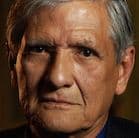
Interviews with Armando Valladares
Cuba · Interviewed February 4, 2010
Solidarity Among Prisoners
“Solidarity from international organizations, governments, and the press, that means protection for the life of the political prisoner.”
Transcript
What do I think is the most important thing for political prisoners? I think it is solidarity. I think the most important thing is precisely that. For them to receive solidarity from international organizations, governments, and the press. That means protection for the life of the political prisoner.
In my case, when Amnesty International adopted me as prisoner of consciousness, the treatment changed. I was still in solitary confinement, but they were more cautious with the beatings and tortures. Also when the Pen Club awarded me with the Freedom Prize and made me honorary member of the French and Swedish Pen Club, that was reflected in the treatment I received.
That is, it is not the same to be a prisoner whom no one knows, who can be killed and no one would feel it, than being someone who is known overseas. That is why the solidarity towards the prisoners is very important. It is really important. It is the only thing that guarantees them the possibility that at least they will not kill him.
When my first book got out of Cuba written on cigarette papers and was published in France, the Nordic Countries and the US, the treatment I was receiving from the communists at the time changed completely. Why? Because through that book I became known as a writer in the intellectual world. So, intellectual committees supporting my freedom were formed in France, Sweden, Norway, and Spain.
That book was the reason why the French Pen Club awarded me with the Freedom Prize, which is a prize awarded to writers who are in prison. As a result, this all generates great publicity around a prisoner. That is why any prisoner who has the chance of writing, painting, doing anything that can become known out of the prison where he is… that is beneficial to let the world know that besides being a political prisoner, he is an intellectual or an artist. I think that is very helpful, and in my situation, the results were extraordinary.
About Armando Valladares
Armando Valladares, a poet, human rights advocate, and former diplomat, was a political prisoner in Castro’s Cuba for 22 years. After international pressure led to his release, he emigrated to the United States and served as U.S. ambassador to the United Nations Human Rights Commission from 1988 to 1990.
Valladares was a Cuban Postal Bank employee who was arrested in 1960 when he refused to display a sign on his desk that endorsed Communism. Valladares, then 23 years old, was convicted of being a “counter-revolutionary” and spent 22 years in prison. He was adopted by Amnesty International as a prisoner of conscience, and his prison memoir “Against All Hope” became an international bestseller and raised the profile of the campaign for his release. This campaign finally succeeded after then French President Francois Mitterand made a personal appeal to Fidel Castro.
During his service as ambassador to the U.N. Human Rights Commission, Valladares succeeded in persuading the commission to adopt a resolution on the human rights situation in Cuba.