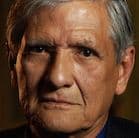
Interviews with Armando Valladares
Cuba · Interviewed February 4, 2010
Business Sustains the Regime
The effects of assistance provided to the Cuban government by foreign governments and companies.
Transcript
The help Cuba has received from foreign countries has been what has sustained Cuba´s government. That is, every time a foreign government helps Cuba it is strengthening the repression. Every time a foreign government helps Cuba, it is contributing to the continuance of the dictatorship and the tyranny. The number one model of these countries which help Cuba is, of course, Spain, which, not only has become an important help from the economic point of view, but also the Secretary of State, Mr. Moratinos, a kind of an unofficial Secretary of State of the Cuban Government has tried to change the EEC policy to obtain more tolerance towards the Cuban dictatorship.
Every country that sends help to Cuba, that does business with Cuba is contributing to and sustaining the dictatorship. And whether they want it or not, they are becoming accomplices of the tortures, the abuse, and the violation of human rights in my country. That wasn´t their attitude toward South Africa, for instance. It was the opposite with the racist Government of South Africa, which I denounced, and I was one of the signatories along Monsignor Desmond Tutu and a group of 25 Nobel Prizes against apartheid and asking for Mandela´s freedom.
They don´t do the same about Cuba. That is, the hypocrisy in regard to the economic sanctions that were good for South Africa and Chile, because they could contribute to those dictators granting some concessions regarding freedoms, but when the same argument is applied to Cuba, and I am talking about the US commercial embargo, they say: “Not to Cuba”. I wonder and I say, why not Cuba? That is a standard I reject because it is racist and discriminatory, that places the Cuban people as third-class people, who do not deserve the international solidarity that South Africa and Chile did. This great hypocrisy is unacceptable to me. That is why if the economic measure against South Africa was good, then it has to be good for Cuba, too.
About Armando Valladares
Armando Valladares, a poet, human rights advocate, and former diplomat, was a political prisoner in Castro’s Cuba for 22 years. After international pressure led to his release, he emigrated to the United States and served as U.S. ambassador to the United Nations Human Rights Commission from 1988 to 1990.
Valladares was a Cuban Postal Bank employee who was arrested in 1960 when he refused to display a sign on his desk that endorsed Communism. Valladares, then 23 years old, was convicted of being a “counter-revolutionary” and spent 22 years in prison. He was adopted by Amnesty International as a prisoner of conscience, and his prison memoir “Against All Hope” became an international bestseller and raised the profile of the campaign for his release. This campaign finally succeeded after then French President Francois Mitterand made a personal appeal to Fidel Castro.
During his service as ambassador to the U.N. Human Rights Commission, Valladares succeeded in persuading the commission to adopt a resolution on the human rights situation in Cuba.