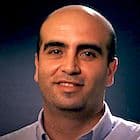
Interviews with Zied Mhirsi
Tunisia
Zied's Vision for Tunisia
“I'm extremely optimistic about the future of Tunisia.”
Transcript
I´m extremely optimistic about the future of Tunisia. I feel that this country can do a lot and achieve a lot to catch up with a lot of countries. We will be hopefully doing much better than the southern European countries– were actually quite bankrupt. I think Tunisia has a healthy economic situation right now. We might benefit from the boom that is happening in Libya. We will become a place that´s very friendly to businesses.
I don´t want to compare it with Dubai. But we´re going to have a boom that would be similar to Dubai in terms of being at the crossroads of different cultures and markets. And a place where a lot of people have a lot of education, and a place that´s open to the world. Very business friendly and open to different cultures and civilizations. I definitely see Tunisia becoming more global– becoming a hub where– Africa can communicate with Europe. Where the U.S. can communicate with the rest of the Arab world.
Where Asia can communicate with Europe and Africa. So I see ourselves becoming more global and more open and a place where we will get back to the situation we were in during the Carthaginian times, [Carthage was an ancient civilization located in what is now Tunisia. From 650 BC to 146 BC, when it was conquered by the Roman Empire, Carthage controlled much of the Mediterranean.] where we were the place where everybody made business and communicated.
About Zied Mhirsi
In 2004, Dr. Zied Mhirsi became a pioneer in Tunisia’s pre-revolutionary blogosphere, and used his blog, Zizou From Djerba, as a platform to express ideas, opinions, and experiences. He soon engaged others in the blogosphere on policy debates about topics like education, agriculture, and the environment. Initially, the Internet was one of the few venues for Tunisians to express themselves without being harassed by government authorities. As the regime of Zine el Abidine Ben Ali became more aware of the blogosphere’s ability to influence society, bloggers like Mhrisi became targets of censorship and persecution.
As a student studying in the United States, Mhirsi became involved in Tunisian radio and through his broadcasts, informed Tunisians about world events. When he returned to his homeland, Mhirsi remained active in radio and used it to promote the use of social media. This concept transformed into a weekly political show that featured voices from the Tunisian blogosphere prior to the 2010 uprising. Since the revolution, Mhirsi has worked extensively with international media analyzing the post-revolution political situation, working with outlets such as CNN, Al Jazeera English, 60 Minutes, CBS News, the New York Times, and the Financial Times, to produce news stories, documentaries, and other shows. In March 2011, Mhirsi co-founded Tunisia Live, the first Tunisian English-language news website. Tunisia Live is viewed by more than 100,000 visitors every month and serves as the main Tunisian news platform for English speakers.
In addition to his media activities, Mhirsi is a global health professional whose public health career focuses primarily on strengthening health systems to combat HIV/AIDS and other serious diseases.
Twitter: @zizoo
Blog: http://www.zizoufromdjerba.com/
Website: http://www.tunisia-live.net/