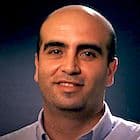
Interviews with Zied Mhirsi
Tunisia
Tunisian Democracy
“So I don't think democracy is going away from Tunisia any time soon.”
Transcript
I think democracy is part of the Tunisian mentality and landscape. It took us a long time to basically get here. I think a lot of people wanted to have democracy from day one. But the fact that independence was won with one party allowed that party to silence everybody. And then with the support of the ex-colonizing power and the rest of the regional environment, that was the way we basically managed our country for the last 50 years. But in the same time Tunisians are open to the world and saw how things were happening overseas. And the fact that this revolution happened was leaderless.
It was not organized by a single party. The fact that Tunisia, unlike other revolutions in the region, went straight to an election of a constituent assembly [Tunisia held elections for a constituent assembly in October 2011.] which means that we´re adopting a bottom-top approach, an approach that will take time but that will pay off on the long-term. We organized nine months later. So it means we took our time to build some sort of consensus and the organized successfully and election, an election where more than 90% of the Tunisians voted. [Tunisian election officials announced after the elections that 90 percent of those registered had voted.
However, many eligible voters did not register, making the actual turnout figures somewhat lower.] It´s said that one of the highest participation rates that you could ever see in the world, not only in the Arab region– an election that was clean, well-organized, a campaign where people debated and organized their meetings freely. We didn´t have a single act of violence– with a very transparent way of showing the results with the participation of civil society and international observers.
These indicators are showing that the Tunisians have definitely adopted democracy as a way of functioning. The results of the elections are also showing that Tunisians know what they want. The options were more than 16,000 candidates in this election. We had a clear majority winning the elections with a participation rate of 90% of the people. This is a legitimate and representative group of people that will definitely allow the Tunisian democracy to continue.
The winners were people who suffered from the dictatorship. The winners are people who were exiled; who spend long time in jail and who basically paid the hard price to access through democracy. So I don´t think democracy is going away from Tunisia any time soon.
About Zied Mhirsi
In 2004, Dr. Zied Mhirsi became a pioneer in Tunisia’s pre-revolutionary blogosphere, and used his blog, Zizou From Djerba, as a platform to express ideas, opinions, and experiences. He soon engaged others in the blogosphere on policy debates about topics like education, agriculture, and the environment. Initially, the Internet was one of the few venues for Tunisians to express themselves without being harassed by government authorities. As the regime of Zine el Abidine Ben Ali became more aware of the blogosphere’s ability to influence society, bloggers like Mhrisi became targets of censorship and persecution.
As a student studying in the United States, Mhirsi became involved in Tunisian radio and through his broadcasts, informed Tunisians about world events. When he returned to his homeland, Mhirsi remained active in radio and used it to promote the use of social media. This concept transformed into a weekly political show that featured voices from the Tunisian blogosphere prior to the 2010 uprising. Since the revolution, Mhirsi has worked extensively with international media analyzing the post-revolution political situation, working with outlets such as CNN, Al Jazeera English, 60 Minutes, CBS News, the New York Times, and the Financial Times, to produce news stories, documentaries, and other shows. In March 2011, Mhirsi co-founded Tunisia Live, the first Tunisian English-language news website. Tunisia Live is viewed by more than 100,000 visitors every month and serves as the main Tunisian news platform for English speakers.
In addition to his media activities, Mhirsi is a global health professional whose public health career focuses primarily on strengthening health systems to combat HIV/AIDS and other serious diseases.
Twitter: @zizoo
Blog: http://www.zizoufromdjerba.com/
Website: http://www.tunisia-live.net/