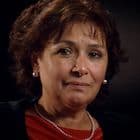
Interviews with Sihem Bensedrine
Tunisia
Collective Repression Under Ben Ali
When one person is targeted as a dissident or opponent, they not only punish the person, they also punish the family, the neighborhood, the grandparent, the children. Everybody around this person is punished.
Transcript
No one single group was not targeted by this oppression. And Ben Ali´s regime started using this collective repression, collective– when one person is targeted as a dissident or opponent, they not only punish the person, they also punish the family, the neighborhood, the grandparent, the children. Everybody around this person is punished. And for me– it was a shock for me, because even if I already have an idea on what is this torture machine, what is this big machine of secret police during Bourguiba regime, but never, never I heard that the person responsible of its act is not the only person sanctioned for these acts. The entourage of people around this person, everybody is targeted.
And they would like to introduce and to present to the world that this country is really a democracy. And having dissolved the only NGO dealing with human rights was not a good thing for them. And then they had to pay for that. And they understood. They have, again, to allow this NGO to restart. But in between they put a lot of pressure on people who are leading this NGO and trying to do their job in a fair way– like me, like Marzouki, like Ben Jafar, like Hadi Rashif (PH), like all these leaders were targeted, were repressed.
And this was the main thing I suffered during the Ben Ali´s regime. This repression started in 1992. And it´s never, never ended until he steps down– until 2011. And– they used a lot, lot of tools. They started with a smear campaign against me, accusing me to be a prostitute, to be a very bad woman who do not have to be respected because I was supposed to defend human rights but I´m really bad person.
About Sihem Bensedrine
Sihem Bensedrine was born in 1950. She studied at the University of Toulouse Le Mirail in France, from which she holds a degree in philosophy. Upon her return to Tunisia in 1977, she began work as a journalist, and became known as a critic of the regime.
As one of the most prominent Tunisian human rights activists, she paid a high price for her views. The regime continually harassed her and her family, pressuring employers to fire her, applying financial pressure, and slandering her in the media. Bensedrine’s family was under constant surveillance, received death threats, and was at times not allowed to travel outside the country. Due to these threats, she spent years as an exile, continuing to speak out on human rights and democracy issues in her homeland.
In 1998, she cofounded the National Council for Liberties in Tunisia (CNLT). In 1999, she launched the “Kalima” website, which reported on conditions inside the country. Kalima later expanded to satellite radio broadcasting. She also cofounded the Observatory for Defense of Freedom of the Press, Publishing and Creation (OLPEC).
Bensidrine returned to Tunisia as the demonstrations against the Ben Ali regime gathered steam. She continues to advocate for freedom of the press and other human rights as Tunisia transitions to a new democratic system of government.