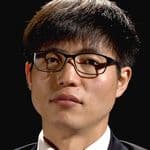
Interviews with Shin Dong-hyuk
North Korea
Responsibility of Freedom
“I’ve struggled to cope with the options and choices that one has in a free society.”
Transcript
For me, I would equate the expression of freedom with the ability to fill your stomach and eat whatever one wanted to eat.
The reason why I answer this way is because, during the 24 years that I lived in the North Korean prison, there was not enough food for us to eat.
Also, I had no freedom to decide whether a particular food was safe or unsafe. We had to eat whatever we could find.
We had to eat whatever we could to fill our stomachs. We did not have the luxury of choosing or having the freedom to choose what we wanted to eat.
So now when I think about all the food I can eat, about the luxury of whatever food is out there, the fact that I can use self-control to eat as much as I want or to eat as little as I want, having that control, having that freedom is what I consider a blessing.
Eating whatever I want to eat, that freedom to choose is something very important.
The most difficult struggle I had adjusting to life in the free world is, in a free society there are so many different options, so many choices for me to make.
During the 24 years I was in the prison camp, I did not have the option or the luxury of making choices.
We were given our food to eat, we were given our clothes to wear, and we were given the work that we did.
I’ve struggled to cope with the options and choices that one has in a free society.
And I also believe that in a free and open society, there are so many things to do, so many things I must do.
If I am not careful, I can fall to the wayside and end up doing bad things.
So in terms of having those choices to make, actually deciding what to do is my biggest struggle.
I could fall into using drugs or committing robberies or other bad things so I must use self-control and I must make wise decisions, make the right decisions.
About Shin Dong-hyuk
Shin Dong Hyuk is the only known person to be born in a North Korean gulag and escape to freedom. In North Korea, whole families are incarcerated for the offenses of a single family member. As many as 130,000 men, women and children are imprisoned in North Korea’s vast system of gulags.
Shin was born in 1982 in Camp 14, the product of a “reward marriage” between two prisoners. He lived with his mother until the age of 12, though they never formed a true familial bond. Shin received a basic education before being pressed into the camp’s labor force. During this time, he witnessed fellow children being beaten, executed and killed in work-related accidents.
In 1996, prison officials brought Shin to a separate detention facility where he was tortured. He had no idea why this was happening to him. Finally, the guards explained that his mother and brother had attempted to escape and they wanted more information. After being held in an underground cell for seven months, Shin was forced to attend the public execution of his mother and brother.
In 2005, Shin and another prisoner were assigned to work on a mountain. Driven by hunger, the two decided to escape over the electrified fence enclosing the camp. Shin’s leg was caught in the fence and scarred, but he managed to get through; the other prisoner was electrocuted and died. From there, Shin managed to cross the border into China where he worked as a laborer for several years until connecting with a journalist who brought him to the South Korean Embassy. From there, Shin escaped China.
Shin’s incredible story has been shared with the world in the book, Escape from Camp 14, by American journalist Blaine Harden. Since escaping, Shin has become a leading voice on North Korean human rights and the country’s gulag system, including providing testimony at the United Nations Commission of Inquiry on Human Rights in the Democratic People’s Republic of Korea (North Korea).